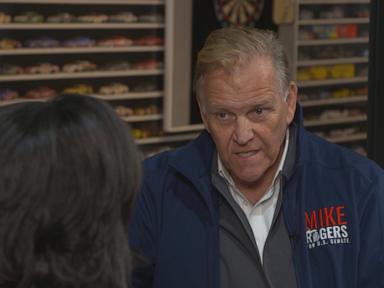
Elections in Michigan rarely follow a predictable script. When you look at the 2026 U.S. Senate race between Republican Mike Rogers and Democrat Abdul El-Sayed, conventional political logic breaks down completely.
Rogers is running a very specific playbook. He is banking on crossover appeal from non-traditional voting blocs, specifically targeting Black and Jewish voters who traditionally lean Democratic. If you want to understand how a Republican plans to win a crucial Midwestern battleground state, you have to look past standard party lines and examine how local anxieties, primary fallout, and foreign policy concerns are redrawing the electoral map in real time.
The Aftermath of a Contentious Primary
To understand why some Jewish voters are listening to a Republican candidate, you have to look at the Democratic primary. El-Sayed survived a brutal, highly polarized primary fight against U.S. Rep. Haley Stevens, where millions of dollars poured in and Israel became a massive flashpoint. Stevens, representing Oakland County north of Detroit, commanded immense loyalty within the state's Jewish community.
When El-Sayed secured the nomination, a fracture appeared. Hundreds of Jewish Democrats signed public letters expressing deep apprehension. Some high-profile donors and activists started exploring alternatives.
Rogers didn't create these divisions, but his campaign is aggressively exploiting them. He has spent months visiting synagogues in areas like Oakland County, positioning himself not as a traditional partisan firebrand, but as a direct alternative to what he labels an unacceptable left-wing extreme. When Rogers tells voters "I'm not Trump," he's consciously trying to lower the barrier for center-left suburbanites who cannot stomach the top of the Republican ticket, but who feel alienated by the current progressive wing of the Democratic Party.
Making Plays in Diverse Communities
The push for crossover support doesn't stop with suburban Jewish voters. The Rogers campaign has also launched targeted ad campaigns featuring Black Michiganders explaining why they plan to cross party lines.
The strategy relies heavily on painting El-Sayed as hyper-focused on international causes rather than domestic urban needs. Ads from pro-Rogers committees lean into this contrast directly, suggesting the Democratic nominee cares more about geopolitical flashpoints than local infrastructure. While critics call these messages a fear campaign, polling and local reports show the strategy is gaining traction in pockets where voters feel neglected by both major parties.
At the same time, El-Sayed is working overtime to stitch together a diverse majority. He has turned to national heavyweights like former President Barack Obama to shore up support, appearing on major cultural podcasts and rallying younger voters who powered his primary victory. Yet, stitching together a coalition that bridges working-class urban centers and anxious suburban enclaves remains an uphill battle.
What This Means for the Final Stretch
Elections are won on margins. In a state like Michigan, where statewide races are decided by razor-thin percentages, even a small percentage of Jewish Democrats staying home or crossing over to vote for Rogers could alter the outcome.
Rogers is betting his entire political future on the idea that local security concerns, community safety anxieties, and foreign policy fallout will outweigh partisan habits. Whether that gamble pays off depends entirely on whether conflicted voters decide the Republican alternative is a safe harbor or a bridge too far.
The race enters its final weeks with both sides fighting intensely for the center. Watch Oakland County. Watch the suburban precincts where old loyalties are fraying. That is where the Michigan Senate seat will actually be decided.
Mike Rogers clashes with Abdul El-Sayed in Michigan debate over Iran, Hamas and Israel
This video provides a direct look at the high-stakes clashes between Mike Rogers and Abdul El-Sayed over foreign policy and regional security during their debates.
http://googleusercontent.com/youtube_content/1



