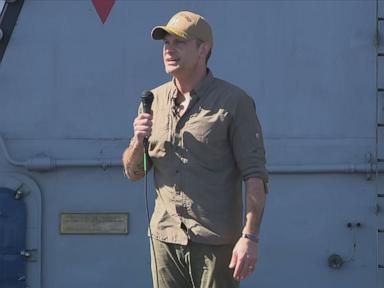
The aircraft carrier USS Abraham Lincoln finally headed back to San Diego after a grueling, marathon deployment that stretched 321 days at sea. Defense Secretary Pete Hegseth flew out to the flight deck to greet the exhausted crew, hand out the Presidential Unit Citation, and push back hard against critics who called the mission a failure.
For nearly eleven months, roughly 5,000 sailors and marines lived through an intense operational tempo in the Middle East supporting Operation Epic Fury. They went 265 uninterrupted days without a single port of call. When regional security and Iranian attacks in Bahrain wiped out regular resupply stops, the crew found themselves isolated, stuck handling austere conditions, supply shortages, and severe psychological strain.
The public narrative surrounding the ship took a dark turn when reports surfaced of low morale, exhausted sailors, and multiple suicide attempts onboard during the blackout periods. Lawmakers started asking hard questions. Acting Navy Secretary Hung Cao later confirmed that eight sailors in the carrier strike group attempted suicide during the ordeal, dragging military leadership into a fierce debate over how long a crew can be pushed before breaking.
Hegseth didn't want to talk about the breakdowns. Instead, he wanted to talk about the firepower.
Standing before the crew, the defense secretary rattled off the strike group's heavy combat statistics. The Lincoln's air wing executed 3,693 combat sorties without a single aircraft mishap. They sank 64 Iranian warships, destroyed 21 anti-ship cruise missiles, launched 450 Tomahawk land attack cruise missiles, and fired 1.37 million pounds of ordnance. Hegseth praised the crew's resilience, handing out the nation's highest unit honor while taking sharp aim at media outlets that questioned the mission's viability.
"They tried to say it was a failed mission," Hegseth told the sailors, pushing back against the negative press cycle that dogged the final months of their voyage. He framed the historic stretch at sea as a testament to American grit under fire.
Yet, the homecoming raises a massive question the Pentagon can't sweep under the rug. How many days at sea is too many?
Standard Navy deployment cycles hover around six months for a reason. Pushing past ten months alters the equation completely, draining maintenance reserves, testing supply chains, and wearing down human beings in ways that shiny combat stats don't immediately capture. While the Lincoln finally made a late stop in Thailand on its long journey home, the psychological and operational toll on the crew has forced a frantic reassessment inside the Navy.
Future rotations are already getting a hard look. Navy officials are promising heavier upfront loading of supplies, better communication links with families back home, and tighter mental health monitoring to ensure sailors aren't left stranded on floating islands for nearly a year without relief.
The USS Abraham Lincoln is docked, the speeches are finished, and the crew is finally reuniting with their families. But the shockwaves from this record-breaking deployment will change how the military manages its capital ships for years to come.



