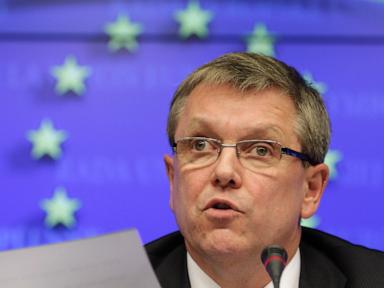
You don't dismantle a deeply entrenched political machine overnight. But watching Hungarian authorities march former Central Bank Governor György Matolcsy into custody marks a seismic shift in Budapest.
Matolcsy, who ran the Hungarian National Bank from 2013 until 2025 during the height of Viktor Orbán’s tenure, was detained by law enforcement at the Central Chief Prosecution Office. Investigators aren't playing around. They've pinned serious allegations on him, including economic fraud causing massive financial damage and the use of forged private documents tied to central bank foundations and real estate deals.
If you've been following Central European politics, you know this arrest didn't happen in a vacuum. Under Prime Minister Péter Magyar's new administration, the country's political landscape has flipped. The newly established National Asset Recovery and Protection Office is actively hunting down misused public and EU funds. Matolcsy's detention proves that the immunity once enjoyed by top-tier architects of the Orbán era is cracking.
Follow the Money and the Foundations
Why does Matolcsy's arrest matter so much? Because the central bank wasn't just managing monetary policy during his decade-long watch. It was funneling billions into various private foundations, buying up luxury real estate, and acquiring commercial assets at heavily inflated prices.
Recent audits laid bare what critics suspected for years. Hundreds of billions of forints went missing or were redirected through opaque corporate structures. Investigators claim these transactions caused severe financial losses to the state. Matolcsy's legal team insists he's innocent and denies all wrongdoing, but the documentary trail compiled by prosecutors is proving difficult to sweep under the rug.
This wasn't just poor financial management. It was a systematic blueprint. State funds flowed outward, real estate was overpaid, and accountability was choked off by a compliant regulatory apparatus. Now, the bill is coming due.
The New Sheriff in Budapest
Prime Minister Péter Magyar staked his entire political campaign on a single promise: holding the old guard accountable and recovering stolen public assets. Voters bought into that vision. They voted for a clean break from the systemic corruption that turned Hungary into an EU pariah and prompted Brussels to freeze billions in recovery funds.
To speed up the reckoning, Magyar's government launched what critics and supporters alike call a "superauthority." This newly empowered investigative unit coordinates police, prosecutors, and tax inspectors into a single task force. Instead of letting complex financial crimes stall out in bureaucratic courts for a decade, the new office moves fast.
Yet, building an actual rule-of-law state takes time. Magyar recently acknowledged public impatience, noting that real life doesn't wrap up neatly like a ninety-minute mafia movie. Arresting a former central bank governor is loud and dramatic, but unravelling tangled offshore accounts and recovering hidden billions requires grueling forensic accounting.
Brussels is Watching
The shockwaves from Matolcsy's arrest extend far beyond Budapest's borders. For years, the European Union withheld billions from Hungary over democratic backsliding and rampant graft under Orbán. By cracking down on high-profile figures and cleaning up institutional corruption, Magyar's administration managed to unlock 16.4 billion euros in frozen funds.
Even European Commission President Ursula von der Leyen's upcoming visit to Budapest highlights how fast diplomatic tides can turn when a government starts making arrests instead of excuses.
At the same time, don't expect a complete U-turn on every policy. While Magyar is aggressively reforming domestic anti-corruption laws, he’s holding firm on hardline migration policies. The razor-wire fences along the southern border aren't coming down, and irregular migrants are still escorted back across into Serbia. Hungary remains locked in a bitter standoff with Brussels over hefty daily fines tied to asylum policies, proving that domestic crackdowns don't automatically mean total alignment with western European liberalism.
What Comes Next
György Matolcsy's detention is just the opening salvo in a much larger institutional purge. Several other former ministers and high-ranking officials from the Orbán era have already faced similar police action over murky public procurement contracts and bribery schemes.
The real test won't be how many high-profile politicians get handcuffed for the cameras. It will be whether the courts can secure lasting convictions, claw back the billions in missing forints, and permanently reform Hungary's financial governance.
If you're watching Hungarian politics right now, understand this: the old untouchable elite are realizing their shield is gone. The fallout from Matolcsy's arrest will echo through European financial markets and domestic politics for months to come.



