Violence struck a Greek Orthodox church in Jordan when at least seven people were killed and roughly 34 others wounded during a funeral service. The tragedy unfolded in Hmoud, a village located in the western Karak Governorate. This area has traditionally maintained a peaceful Christian community within the wider Hashemite Kingdom, making the incident a profound shock to local residents and state officials alike.
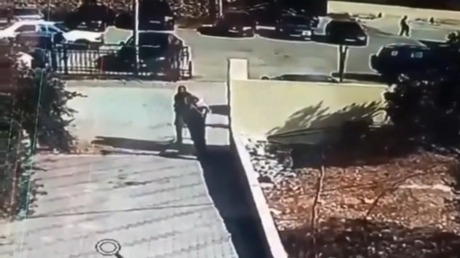
Security footage from St. George’s Church shows three armed individuals arriving at the scene while mourners gathered inside. The assault lasted roughly fifteen minutes before the perpetrators escaped in a vehicle. Interior Minister Mazen al-Faraya noted that the suspects belong to a group of extremists and remain at large as security forces comb the region. King Abdullah II visited wounded survivors in the hospital and vowed that the state will track down those responsible and apply the harshest penalties under the law.
Incidents of this scale are extraordinarily rare in Jordan. The country has long prided itself on being a stable anchor in a volatile Middle East. When security breaks down so violently at a house of worship, it forces a hard look at underground radical networks that manage to elude intelligence monitoring. Extremism doesn't always announce itself loudly; often, small cells operate in rural pockets until they strike a high-profile target designed to maximize shock value and communal trauma.
For anyone tracking security trends in the region, the aftermath of the Karak attack highlights several pressing concerns. To understand the bigger picture, check out the excellent analysis by The Washington Post.
The Fragility of Local Stability
Jordan occupies a unique geopolitical buffer zone. It borders conflict-heavy areas while maintaining internal security through strict law enforcement and close cooperation with international allies. Yet, porous borders and domestic economic pressures create fertile ground for radicalization. When young men are drawn to extremist ideologies, they look for soft targets that guarantee maximum visibility. A funeral at a historic church in a quiet governorate fits that grim calculation.
The Response and the Manhunt
State authorities flooded Hmoud with specialized security units immediately following the shooting. Checkpoints popped up across the Karak Governorate to restrict movement and capture the fleeing gunmen. King Abdullah's swift appearance at the hospital in a military field uniform sent a clear political signal. The monarchy wants to reassure the public that the government retains absolute control and won't tolerate sectarian violence.
However, catching the culprits is only half the battle. Preventing copycat attacks requires intelligence agencies to dismantle the broader recruitment networks operating in the shadows. Security analysts point out that tracking down decentralized cells demands deep community trust and aggressive digital forensics.
If you are following developments in the region, watch how the investigation unfolds over the coming days. The government's ability to apprehend the suspects quickly will determine public confidence in the days ahead. Security measures remain tightened across Karak, and emergency protocols stay active while the manhunt continues.



