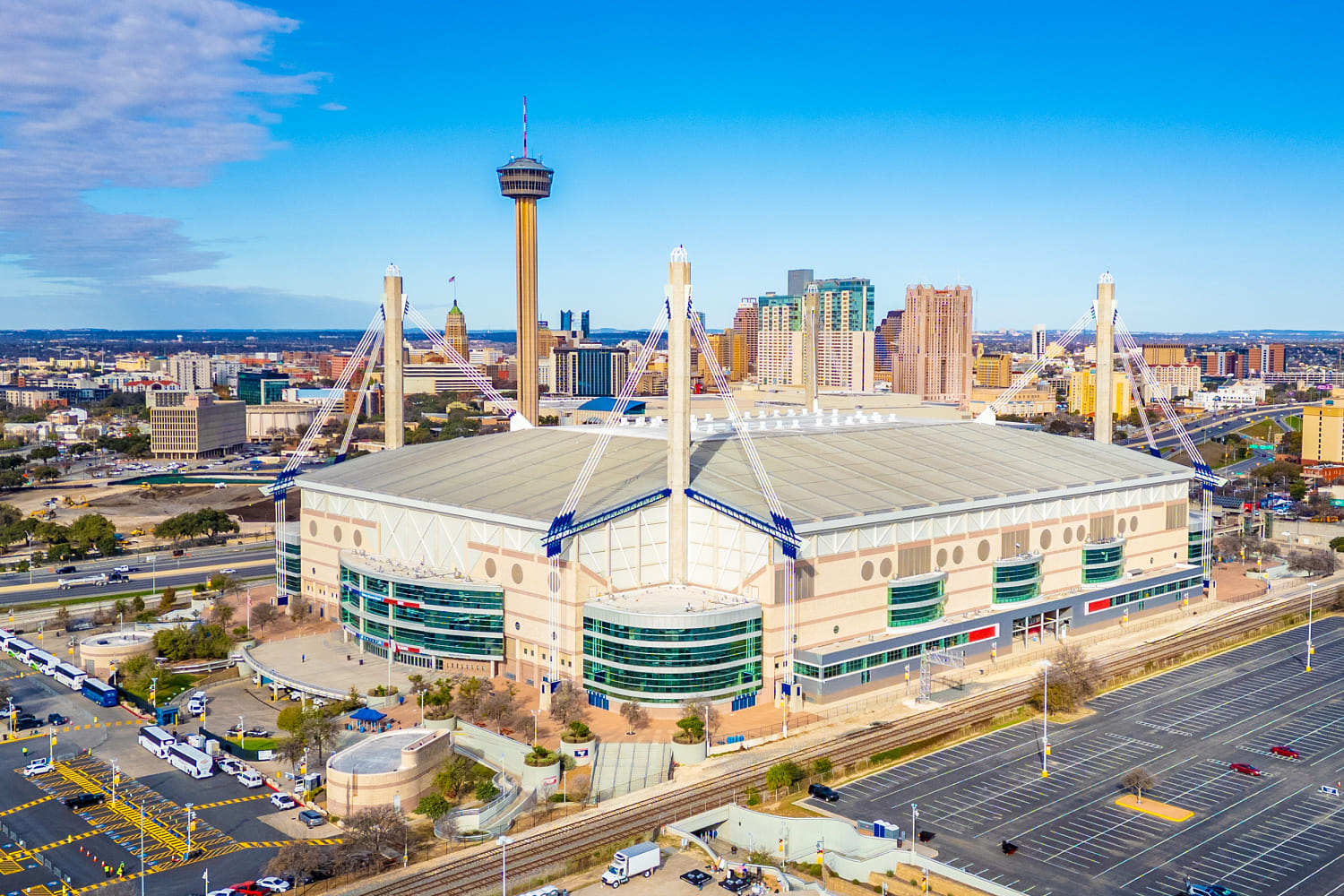
Friday night football games are supposed to be about loud crowds, bright lights, and harmless entertainment. But a routine military tribute turned into an absolute nightmare at the Alamodome in San Antonio during a matchup between UTSA and Navy. A U.S. Air Force service member lost his life after falling from the rafters during a pregame rappelling demonstration.
When you attend a college game, you expect flyovers, marching bands, and patriotic displays designed to honor the armed forces. You don't expect to witness a fatal workplace accident in front of 23,000 spectators.
The Incident That Stunned the Alamodome
Four military service members were scheduled to take part in the pregame rappelling stunt. These specialists are trained to embed with ground units and coordinate air and artillery strikes, which means rapid rope descents are part of their daily professional reality. They know the risks. They train for the worst.
Yet, during the descent inside the stadium, one of the airmen slid in an uncontrolled manner and slammed into the ground at full velocity.
Chaos followed instantly. Football staff rushed to help while medical teams administered emergency first aid. Fans watched in shock as the injured service member was loaded onto a stretcher and rushed to a local hospital, where he later passed away from his injuries.
Why Pregame Stunts Deserve Closer Scrutiny
Whenever an accident like this happens, the public conversation immediately pivots to safety protocols. Stadiums are massive, complex architectural structures with unique rigging challenges. Rappelling from overhead rafters isn't like sliding down a training tower on a military base. You're dealing with immense heights, public distractions, complex lighting rigs, and intense time constraints.
People always ask whether these high-risk demonstrations are truly necessary. Military recruitment and community engagement displays are a staple of modern sports entertainment. From flyovers to parachute drops, fans love the pageantry. But when things go wrong, the human cost is catastrophic.
In August 2001, a similar tragedy struck when Navy SEAL Lt. Cmdr. Rock E. Blais died after a parachute mishap during a practice session at Tampa's Raymond James Stadium. Accidents are rare, but when equipment fails or human error creeps into high-altitude stunts, the margins for error are zero.
The Immediate Aftermath and Community Impact
Inside the stadium, the mood shifted in a heartbeat. UTSA head coach Jeff Traylor told reporters after the game that he was only told there had been an incident delaying kickoff by ten minutes. But once he stepped onto the field, he could feel the shift in the atmosphere.
"You could tell the energy was just gone," Traylor said. "It just really puts things in perspective."
UTSA won the game 38-34, but the final score felt entirely irrelevant. The university quickly activated support services for students, faculty, and staff who had witnessed the terrifying incident. The Air Force confirmed the airman was assigned to the 6th Combat Training Squadron, Detachment 2, though his identity was withheld pending family notifications.
Investigations by military authorities are ongoing to determine exactly what caused the rope failure or slide malfunction. Until official findings emerge, the entire sports and military community is left grappling with a profound loss disguised as routine entertainment.
WATCH: Parachutist falls to ground while dropping in pre-game at Armed Forces Bowl in Texas
This video provides footage of a separate recent pregame military demonstration incident in Texas, highlighting the inherent risks involved in high-altitude stadium stunts.
http://googleusercontent.com/youtube_content/1