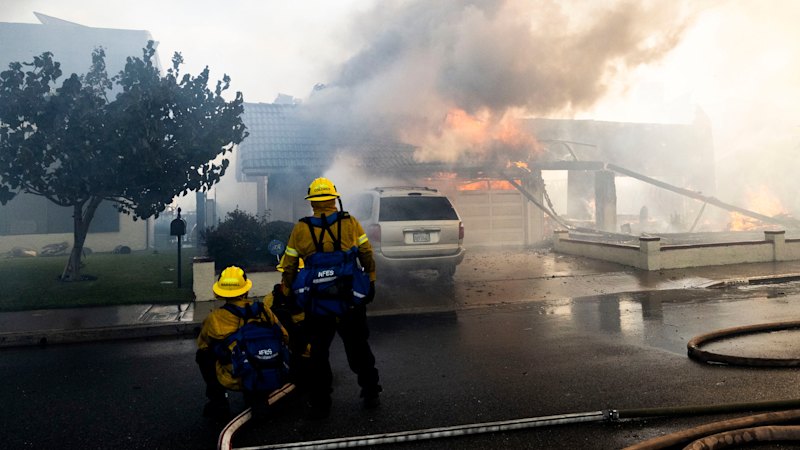
Flames don't wait for committee meetings or evacuation notices. When a combination of blistering heat, low humidity, and ferocious winds slams into the dry landscape, disaster moves fast. Right now, multiple Southern California homes are ablaze as a violent cocktail of extreme weather triggers widespread panic, mandatory evacuations, and emergency power shutoffs across the state.
If you live anywhere near the foothills, you already know the sinking feeling in your stomach. The air turns dry, the wind howls against the windowpanes, and the local news alerts start pinging relentlessly. Let's look at what is actually happening on the ground, why these critical fire weather threats are becoming a terrifying routine, and what you can do when the grid goes dark.
The Anatomy of a Critical Fire Weather Threat
The trigger for the current crisis is a familiar demon: the Santa Ana winds. Meteorologists at the National Weather Service flagged a massive high-pressure system driving hot, dry northeast winds across Southern California. We are talking sustained winds hitting 20 to 40 mph, with violent gusts ripping through mountain passes and canyons at 50 to 70 mph.
When winds move that fast over brush that hasn't seen meaningful rain in months, every single spark becomes an immediate catastrophe. In San Clemente, a wind-driven fire tore through local hillsides, quickly exploding across 200 acres and forcing panicked residents to flee toward San Juan Capistrano. Further north, the Peak Fire in Azusa scorched over 40 acres in less than two hours, testing the limits of local air and ground crews.
At the same time, the Bryson Fire in Malibu began throwing glowing hotspots across coastal ridges, keeping thousands of structures under direct threat. It is a stark reminder that geography doesn't matter much when the wind decides to whip things into a frenzy. Canyon communities, coastal ridges, and inland valleys are all playing the same high-stakes game of chance.
Why Utilities Are Pulling the Plug
If you woke up to dead outlets and dark refrigerators in parts of Northern or Southern California, you aren't alone. More than 175,000 customers lost electricity as major providers like Pacific Gas and Electric Company initiated aggressive Public Safety Power Shutoffs.
Nobody likes sitting in the dark, but history forces the hand of utility operators. Past catastrophic blazes were directly traced to electrical equipment clashing with high winds or snapping power lines in dry brush. By cutting power proactively, companies try to eliminate ignition sources before a branch hits a transformer.
Yet, living through a PSPS event creates its own chaos. Traffic lights go out, garage doors refuse to open without manual cranks, and vulnerable residents relying on medical devices face immediate peril. It is a blunt instrument used to prevent total destruction, leaving communities stranded while they wait for the wind speeds to drop.
Lessons From Past Tragedies and Emergency Preparedness
Local leadership is under immense scrutiny following the devastating firestorms of early 2025 that destroyed thousands of homes and claimed dozens of lives. Los Angeles Mayor Karen Bass and regional fire departments have shifted toward aggressive pre-deployment. Crews and heavy air tankers are staged before the first flame touches a ridge, rather than scrambling after the fact.
Still, government response can only do so much when individual preparation lags behind. If you want to protect your property and your family from these seasonal firestorms, you have to adopt a proactive mindset.
- Clear every scrap of dry brush, dead leaves, and combustible debris at least five feet away from your foundation. Embers travel miles on high winds and often ignite mulch or patio furniture long before the main wall of fire arrives.
- Keep emergency go-bags packed by the front door with essential documents, medications, pet supplies, and chargers. When evacuation orders drop, you will have minutes, not hours, to get out.
- Maintain manual overrides for your garage doors and invest in a reliable portable power station or generator to keep vital electronics running during forced utility blackouts.
- Monitor real-time local updates through official emergency channels instead of waiting for a knock on the door that might come too late.
The climate isn't getting any calmer, and the dry seasons are stretching deeper into the year. Staying safe means assuming the worst-case scenario is always just one gust away.



