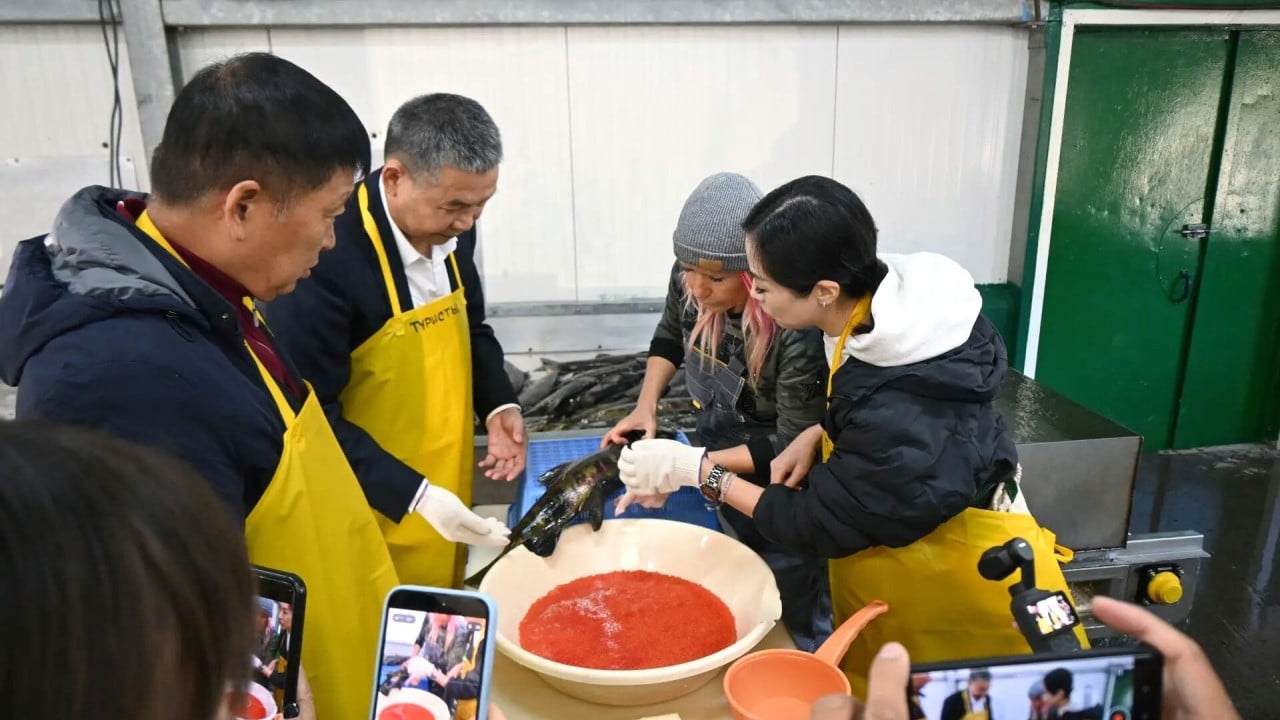
Geopolitics rarely stays confined to conference rooms in Geneva or New York. Sometimes, it looks like a Chinese business delegation touring a seafood processing plant on a cold, windswept island in the Pacific.
When a commercial group from China's Heilongjiang province recently traveled to Etorofu—the largest of the islands in the chain known as the Kurils in Russia and the Northern Territories in Japan—they weren't just checking out local seafood. They were exploring joint investment opportunities with Russian authorities. And Tokyo went ballistic.
Japan's foreign ministry labeled the move completely unacceptable. But protests from Tokyo won't change the ground reality. Moscow and Beijing are tightening economic ties in Russia's Far East, and disputed territories are becoming prime real estate for cross-border cooperation.
The Core Conflict Over the Kurils
To understand why a business trip causes a major diplomatic headache, you have to look back at the end of World War II. Soviet forces seized four islands off Hokkaido right after Japan surrendered in August 1945. Tokyo maintains those islands were illegally annexed. Moscow insists the takeover was fully legitimate under wartime agreements.
Because of this unresolved row, Japan and Russia have never signed a formal post-war peace treaty. Decades have passed, yet the diplomatic freeze remains locked in ice.
Now, add China into the mix. Beijing isn't just watching from the sidelines. As Russia leans heavily eastward due to massive Western sanctions over the Ukraine war, Moscow is throwing open the doors of its Far Eastern regions to Chinese capital and enterprise.
What the Chinese Delegation Actually Did
The recent trip wasn't a military maneuver or a high-level state summit. It was a nuts-and-bolts economic scouting mission.
Organized alongside Sakhalin Oblast officials, the Heilongjiang delegation looked at concrete economic sectors:
- Local seafood processing facilities and marine resource harvesting.
- Tourism infrastructure development in the Southern Kurils.
- Potential joint ventures between private Chinese enterprises and Russian regional firms.
Sakhalin Governor Valery Limarenko has made no secret of wanting foreign investment to develop the remote islands. For Chinese companies looking for stable regional supply chains and resource access, the region offers untapped potential, regardless of Tokyo's sovereignty claims.
Beijing's Stance and the Broader Diplomatic Crisis
When Japanese reporters asked Beijing about the visit, Foreign Ministry spokespersons gave a predictable response. They noted that Beijing does not comment on routine commercial activities conducted by private enterprises. At the same time, Chinese diplomats emphasized that the outcomes of the victory in the World Anti-Fascist War should be respected.
That single phrase carries immense weight. It signals that Beijing views Russia's administrative control through the lens of historical outcomes, dismissing Tokyo's territorial grievances entirely.
This friction doesn't happen in a vacuum. It comes amid an already tense bilateral climate between China and Japan. Relations have hit severe turbulence over trade restrictions, rare earth export controls, and sharp diplomatic sparring over regional security issues. When Chinese business groups set foot on Russian-administered islands that Japan claims as its own, it pours gasoline on an already burning fire.
Why Tokyo's Protests Fall Flat
Japan can summon ambassadors and issue strong diplomatic protests until it's blue in the face, but diplomatic scolding has zero practical impact on Russian administrative control or Chinese commercial curiosity.
Moscow controls the territory, collects the taxes, and issues the permits. If Russian regional authorities invite Chinese investors to tour seafood plants or pitch tourism projects, businesses will go where profit and opportunity beckon. Tokyo's insistence that these islands are an inherent part of Japanese territory under international law matters deeply to the Japanese public, but it doesn't stop foreign capital from entering the Russian Far East.
As long as Russia and China see mutual benefit in bypassing Western-dominated financial networks and integrating their regional economies, visits like the one to Etorofu will continue. Tokyo can protest the symbolism, but Beijing and Moscow are writing a new economic reality on the ground.



