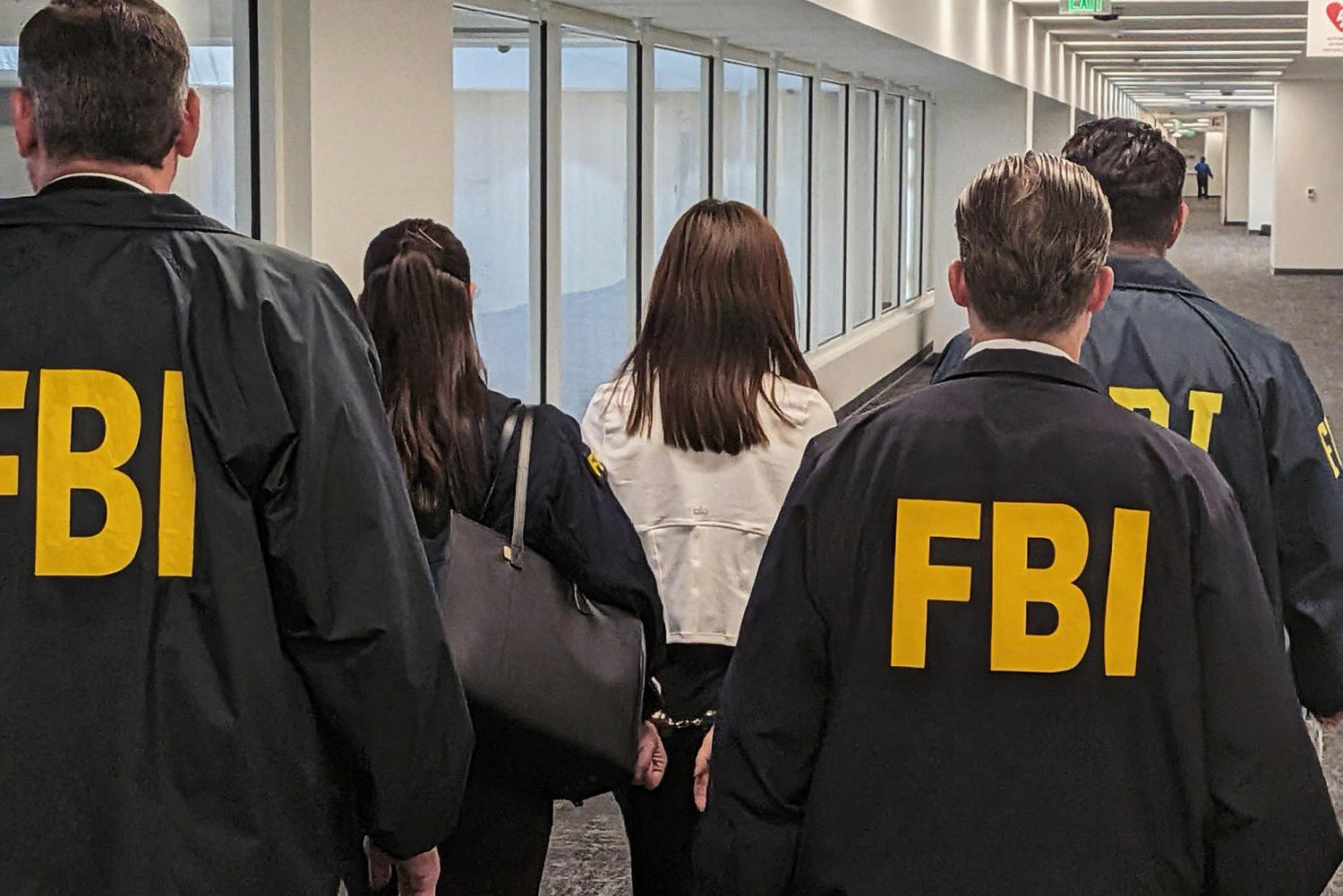
The handcuffs clicked shut at Los Angeles International Airport just as a one-way ticket to Shanghai was about to pay off.
Federal authorities apprehended 34-year-old Wanying Zhang, a Southern California realtor also known as Heather, right before she could board her flight. Prosecutors allege Zhang wasn't just catching a routine trip home. She was fleeing the country after working as an unregistered operative for Beijing. Her alleged mission? Keeping tabs on the son of a high-ranking Taiwanese official living stateside.
If you think foreign espionage operates like a Hollywood movie with secret drop points in dark alleys, the reality is far more mundane—and a lot closer to home. Zhang's case highlights how everyday professionals are recruited to perform low-level surveillance on US soil, testing the limits of federal counterintelligence and shifting how the Department of Justice handles pre-trial detention for foreign influence suspects.
Inside the Allegations Against Wanying Zhang
Federal filings paint a disturbing picture of how foreign intelligence networks utilize local proxies. According to the US Attorney's Office for the Central District of California, Zhang traveled north to Seattle back in 2025. Acting on direct instructions from Chinese government officials, she allegedly tracked a close relative of a Taiwanese leader.
She didn't just snap a few casual photos. Prosecutors state she utilized specialized tradecraft to evade detection, documenting license plates, capturing videos, and meticulously relaying the data back to her handlers.
When the FBI caught up with her at LAX, she was trying to vanish. That single attempt to bolt changed everything. Federal prosecutors didn't hesitate to lock her up without bail while awaiting trial, pointing to a massive flight risk. Under federal law, acting as an unregistered foreign agent under 18 U.S.C. Section 951 carries a maximum prison sentence of 10 years. But the legal battle goes far beyond a single decade behind bars. It exposes the ongoing friction points between Washington, Beijing, and Taipei playing out right in American suburbs.
Why Pre-Trial Detention Is Becoming the Norm for Foreign Agents
Federal judges are losing patience with suspects accused of spying for adversarial nations. Historically, securing pre-trial release for non-violent offenses was standard practice. Bond was posted, conditions were set, and defendants awaited their day in court from the comfort of their homes.
That era is over.
When national security and foreign intelligence intersect, the calculus changes completely. Prosecutors successfully argued that Zhang possessed the motive, the international connections, and the immediate means to escape US jurisdiction. A one-way ticket to Shanghai isn't just travel documentation; it's a neon sign waving an intense flight risk flag.
Federal agencies are sending a loud message. FBI Director Kash Patel made it clear that America is no longer a soft target for covert foreign operations. If you surveil foreign leaders' families on US soil and try to fly out, federal law enforcement plans to intercept you before you clear security.
The Broader Reality of Localized Foreign Influence Operations
We tend to imagine state-sponsored espionage as sophisticated cyberattacks or high-level industrial theft of military blueprints. Yet, state intelligence services frequently rely on non-traditional operatives. Realtors, business owners, and local residents provide a layer of camouflage that trained intelligence officers simply cannot match.
Think about it from a handler's perspective. A local professional blending into a Southern California suburb attracts zero attention compared to a known foreign diplomat or military attaché. They can rent a car, drive to Seattle, photograph a residence, and send encrypted messages without setting off neighborhood alarms.
This strategy relies on plausible deniability. If caught, the operative is often left isolated, facing the full brunt of the federal justice system alone while foreign embassies issue standard denials or stay silent. Zhang's situation matches a growing list of federal prosecutions where ordinary residents traded their legal status for entanglement with foreign intelligence services.
What Happens Next in the Legal Process
Zhang faces a stern judicial road ahead in the US District Court for the Central District of California. Defense attorneys handling these federal indictments face an uphill battle. When prosecutors present digital forensics, travel logs, and communication trails linking a defendant directly to foreign handlers, arguing a lack of intent becomes nearly impossible.
The broader implications stretch across international lines. Taiwan's political leadership and its supporters operate in a constant crossfire of intimidation and surveillance campaigns. Incidents like this pull the curtain back on the invisible security battles fought daily across American cities.
Keep an eye on how federal courts handle pre-trial releases for foreign agent cases moving forward. The door is slamming shut on bail for anyone accused of acting on behalf of adversarial governments.
Protect your digital footprint, stay aware of who you do business with, and remember that federal counterintelligence agencies are watching international movements closer than ever.



