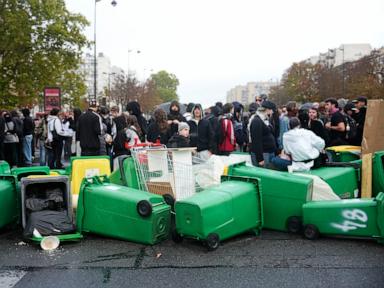
Thousands of arrests. Tear gas hanging thick outside school gates. Trash bins stacked into barricades. France is back on the streets, and this time, the rebellion is coming straight from the nation's high schools.
What started as a localized strike over staff shortages in a Créteil high school has spiraled into a nationwide movement. It's disrupting daily life, testing police restraint, and throwing a massive wrench into the upcoming presidential election campaign. If you think this is just typical French teenage rebellion, you're missing the bigger picture.
The Breaking Point Inside French Classrooms
Let's be real. French high schools have been struggling for years, but things reached a boiling point this term. Students aren't just skipping class for fun; they are walking out because the conditions are genuinely brutal.
Videos circulating online show crumbling infrastructure that would shock anyone expecting a modern European education system. We are talking about classrooms with collapsed ceilings, peeling paint, broken furniture, and actual rats scampering through hallways. During summer heat waves, students roast in unventilated rooms. In winter, heating systems fail, leaving teenagers shivering at their desks. Similar analysis on this matter has been provided by USA.gov.
Add overcrowded classrooms and chronic staff shortages to the mix, and you get an explosive cocktail. When teachers call in sick and aren't replaced, entire schedules implode. Students spend hours sitting in courtyards with zero supervision, wondering why they are mandated to sit through grueling eight-hour days running from 8 a.m. to 6 p.m. only to face a hyper-competitive and deeply stressful university entrance system.
Beyond the Gates: A Crisis of Social Mobility
Education in France has historically been the great equalizer. It’s supposed to lift kids from disadvantaged suburbs—known as banlieues—into the middle class. But that promise is breaking down fast.
Recent international assessments like the PISA reports show French scores in reading and mathematics sliding downward. When students see their future slipping away through underfunded schools and a rigid bureaucratic system, they do what the French do best: they riot.
High schoolers are joined by university students and even high-profile activists. Climate campaigner Greta Thunberg recently joined protesters at a suburban Paris high school, drawing international spotlights to a domestic boiling point.
The Clash With Police and Rising Violence
Protests in France rarely stay peaceful for long, and this wave is no exception. While the majority of students are marching with legitimate grievances, opportunistic actors and rioters have embedded themselves in the crowds.
The government's response has been heavy-handed. Riot police have deployed tear gas grenades and batons on a massive scale, leading to thousands of arrests nationwide. Some of these clashes have resulted in horrific, life-changing injuries. Teenagers have suffered severe trauma, including a 14-year-old who had his jaw shattered by a tear gas canister and a 15-year-old who lost a hand to a police stun grenade.
On the flip side, interior ministry officials report that police and school staff face constant barrages of heavy fireworks, acid, and projectiles. Blockades have turned violent, with trash cans and debris set ablaze to shut down access entirely. Emmanuel Macron's administration finds itself walking a tightrope: respecting the constitutional right to protest while trying to stop schools from turning into war zones.
How the 2026 Presidential Race is Feeds on the Chaos
With Macron constitutionally barred from running for a third consecutive term, the spring presidential election is wide open. Naturally, every major political faction is trying to weaponize the student protests for their own gain.
Far-left leader Jean-Luc Mélenchon has leaned hard into the student movement. He's inviting high school activists onto his rally stages, slamming police brutality, and pushing radical populist reforms like lowering the voting age to 16 and abolishing selective university admissions.
Meanwhile, far-right figurehead Marine Le Pen is playing her traditional law-and-order card, demanding harsher penalties for rioters and broader powers for police. Conservative challengers like former Prime Minister Edouard Philippe are condemning the wanton destruction while acknowledging the deep frustration plaguing the public school system.
Protests as a French Tradition
Let's not pretend this came out of nowhere. Taking grievances to the streets is practically a French national sport, dating straight back to 1789. From the massive student uprisings of May 1968 to the Yellow Vest movement and the fierce pension reform strikes, shutting down the country is the default method for demanding change.
Even our neighbors are catching the contagion. Similar student protests and school closures have popped up in parts of Belgium and Italy, driven by shared anxieties over the future of public education and youth prospects.
The unrest isn't dying down anytime soon. If the government wants to restore order, minor cosmetic fixes won't cut it. Real investment in infrastructure, mental health support, and teaching staff is the only way forward. Until then, keep an eye on the streets—because French youth are making sure nobody can ignore them.



