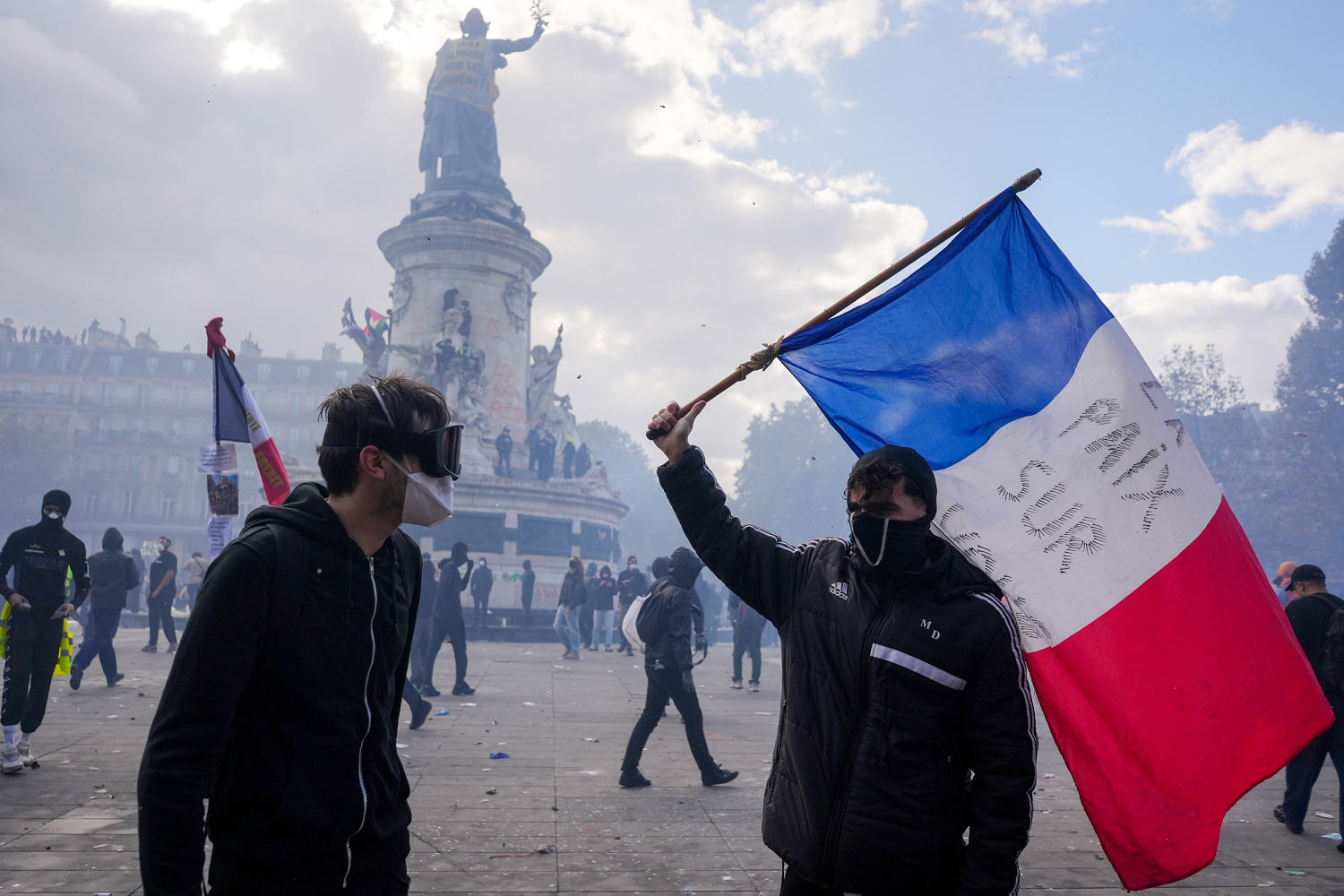
French politics rarely stays quiet for long, but what just happened across Paris, Lyon, Lille, and Grenoble crossed a dangerous line. Emmanuel Macron looked straight into the cameras and declared that "illegitimate" demonstrations will be banned across the country. Street battles, torched city halls, looted storefronts, and a paralyzed security apparatus forced the government's hand. When France protests turn into full-blown urban warfare, the state stops negotiating and starts clamping down.
Most international observers look at these events and assume it is just another standard round of French labor disputes. They are wrong. This explosion of anger is messier, faster, and much harder to control than the traditional union strikes outsiders are used to seeing. Understanding why Macron took such a draconian stance requires looking past the surface headlines and examining how public frustration has morphed into something far more volatile.
The Breaking Point Behind the French Unrest
You cannot understand the current crackdown without looking at the economic pressure cooker everyday citizens are trapped inside. Energy bills have skyrocketed. Household budgets are completely squeezed. Public services are fraying at the seams in both urban banlieues and rural towns. People are genuinely furious, and that fury needs an outlet.
When things started last month inside a modest high school in Créteil over dilapidated buildings and chronic staff shortages, nobody predicted it would metastasize into nationwide chaos. Students walked out. Teachers joined in. Soon, transport blockades choked major cities, and opportunistic crowds flooded the streets. By the time weekend riots broke out, the original message about education conditions got entirely lost behind flying paving stones, smashed glass, and burning vehicles.
Government officials found themselves completely caught flat-footed. Intelligence agencies failed to forecast the sheer scale of the violence. When two people were arrested over an outright arson attack on the Limoges city hall, alarm bells started ringing at the Elysee Palace. Security forces were stretched past their absolute breaking point, trying to protect railway stations, government ministries, and commercial districts all at once.
How High School Discontent Spiraled Into National Chaos
A localized grievance about school funding rarely sparks national panic on its own. It catches fire only when millions of people already feel invisible. Parents struggling to buy groceries saw their kids marching against broken infrastructure, and solidarity spread like wildfire across social media platforms.
Within days, opportunistic agitators hijacked the momentum. What began as peaceful student walkouts morphed into nighttime clashes where storefront windows were shattered and merchandise was dragged into the streets. Police forces accustomed to managing predictable union marches found themselves facing chaotic, decentralized groups wearing black hoodies rather than high-vis vests.
The Economic Shockwaves
Financial markets hate instability, and French bond yields reacted instantly. Yields on France's ten-year government bonds climbed past equivalent US Treasuries for the first time since 2013. That single financial indicator tells you everything you need to know about investor nervousness. It is not just about broken windows on the Champs-Élysées. It is about deep-seated anxiety over whether the French state can maintain fiscal and civil order.
Blame started flying immediately across the political spectrum. The ruling centrist party pointed fingers directly at Jean-Luc Mélenchon and his France Unbowed movement, accusing far-left political figures of stoking insurrectionary flames. Rival politicians from the center-left to the hard-right joined the chorus, claiming that certain factions want to burn down republican institutions for short-term electoral theater.
Drawing the Line Between Unions and the Ultra Left
Macron's strategy is simple on paper but explosive in practice. He wants to separate traditional collective bargaining from outright civil disobedience. Recognized trade unions will still be permitted to march, though authorities will heavily dictate their routes and timings to shield local businesses from collateral damage.
Unions hate this distinction. They argue that restricting unauthorized protests infringes on fundamental constitutional rights. When you give the police unilateral authority to label a demonstration "illegitimate" before it even starts, you cross a grey line into authoritarian territory. Critics are already shouting about creeping police-state tactics.
Yet the government feels it has zero choice. The people torching stores and clashing with riot police aren't union workers carrying picket signs about retirement ages or wage hikes. They are decentralized, radical elements—often described by officials as seditious ultra-left groups—who show up specifically to smash things and provoke law enforcement. Macron is betting that the general public cares more about safety and property protection than abstract debates over protest permits. He might be right, but the gamble carries immense political baggage.
The Trap of Preemptive Bans
Banning protests in major urban centers sounds effective until you look at how it plays out on the ground. When authorities shut down planned student demonstrations in Paris and Lyon, people didn't just stay home. They scattered. Small, unpredictable flash mobs formed across metro stations and side streets. Police spent entire days playing an exhausting game of whack-a-mole across the capital.
Preemptive bans often escalate tension rather than defuse it. When citizens feel like the state is actively stripping away their right to assemble, civil disobedience mutates from peaceful marching into underground defiance. The Yellow Vests movement taught France this exact lesson back in 2018 and 2019. Cracking down too hard on symptoms never cures the underlying disease.
Why This Crackdown Carries Massive Political Risk
France has a proud, fierce heritage of rebellion. Striking and protesting are practically national pastimes. Telling French citizens that certain types of protests are banned crosses a historical nerve.
When you criminalize dissent, you risk turning moderate citizens into radical opponents. If a group of citizens wants to protest cost-of-living crises outside official union channels, labeling them illegitimate alienates millions of working-class people who feel ignored by Paris elites. Interior Minister Sébastien Lecornu promised a massive security mobilization for upcoming weekend rallies, but piling more riot police onto the streets doesn't fix a population that has lost faith in its leaders.
Worse still, foreign actors and online extremists love this kind of chaos. Intelligence reports highlighted how pro-Russian and far-right online accounts actively amplified graphic videos of police clashes to amplify panic and deepen social fractures. Macron is fighting a multi-front war against economic inflation, radical agitators, opportunistic politicians, and digital disinformation campaigns.
What Comes Next for European Civil Disobedience
The unrest gripping France serves as a warning sign for the rest of Western Europe. Across the continent, post-pandemic inflation, soaring energy prices, and crumbling public infrastructure are creating a toxic cocktail of public anger. Governments everywhere are struggling to figure out where legitimate democratic dissent ends and public safety threats begin.
If Macron succeeds in isolating violent actors while keeping traditional labor channels open, he establishes a blueprint for handling modern urban riots. If he fails, his administration faces a long, brutal slide toward total political paralysis.
Do not expect the streets of Paris to stay calm for long. The underlying grievances haven't vanished. People are still paying staggering utility bills. Public services are still strained. The upcoming days will test whether iron-fisted security measures can successfully suppress deep public rage, or if France is simply lighting the fuse for an even bigger explosion down the road.