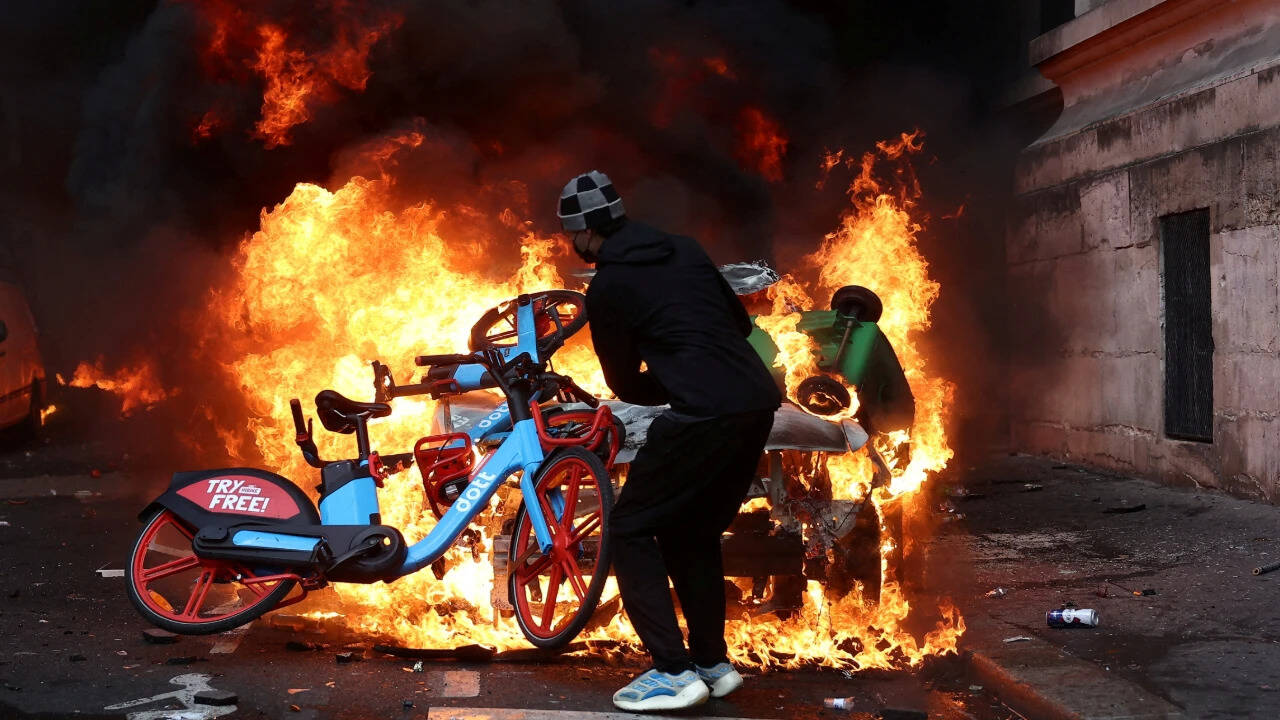
Tear gas, shattered storefront glass, and blocked landmarks. Paris isn't just dealing with typical political friction right now. Street protests over soaring living costs have boiled over into some of the most destructive violence the country has seen in years, forcing officials to weigh extreme measures.
Prime Minister Sebastien Lecornu refused to rule out imposing a state of emergency after weekend demonstrations spun completely out of hand. With thousands of shops damaged and arrests soaring past two thousand, the government is scrambling to regain control. Here is what is actually happening on the ground and why the situation has reached a breaking point.
Why Did the French Unrest Turn Violent?
Discontent over inflation and the rising cost of living has been simmering across Europe for months. But things escalated dangerously in France over the weekend. Protesters blocked the entrance to the iconic Louvre museum in Paris, while demonstrations elsewhere spiralled into chaos.
Interior Minister Laurent Nunez admitted that authorities lost control. He noted that the security setup was completely mismatched against rioters, looters, and radical activists who hijacked the marches. More than 2,330 people were taken into police custody over the weekend, with adults making up roughly 70 percent of those detained. Additional insights regarding the matter are explored by NPR.
President Emmanuel Macron publicly acknowledged failures in the government's initial response. This came despite deploying roughly 60,000 law enforcement personnel across the country. Small businesses bore the brunt of the chaos. Commerce officials estimate that at least 3,000 shops were damaged or targeted, with financial losses piling up into the hundreds of millions of euros.
Curfews and Crackdowns on Resale Markets
To stop the destruction from repeating night after night, the government rolled out immediate restrictions. Authorities announced partial curfews running from 8 pm to 6 pm in four northern cities, including Lille, to protect local businesses from further looting.
At the same time, Digital Minister Anne Le Henanff targeted secondary markets. She summoned representatives from major online resale and social platforms—including Vinted, eBay, Amazon, Leboncoin, Meta, and TikTok—demanding they immediately pull listings for items stolen during the weekend riots. When looters clear out thousands of storefronts, turning quick profits online becomes the next hurdle for law enforcement.
Political Fallout and Regional Ripple Effects
The political shockwaves hit immediately. Interior Minister Laurent Nunez offered his resignation on Monday following the weekend chaos. President Macron refused to accept it, opting instead to keep his team intact while they try to stabilize the country.
This crisis isn't happening in a vacuum. Similar cost-of-living protests have broken out in other parts of Europe. Minor clashes hit Milan and Belgium over the weekend, while demonstrations continue to simmer in Spain, Portugal, and Albania.
Meanwhile, international bodies and neighboring governments are watching closely. The European Union condemned the widespread violence as unacceptable while stressing that the fundamental right to peaceful protest must remain protected. Germany updated its official travel advice for France, warning citizens that further demonstrations and sudden outbreaks of violence remain a distinct possibility in the coming days.
Check local transit schedules and avoid central protest hubs if you're traveling through major French cities right now. Stay tuned to official local updates as Prime Minister Lecornu decides whether to escalate emergency measures before next weekend's planned demonstrations.



