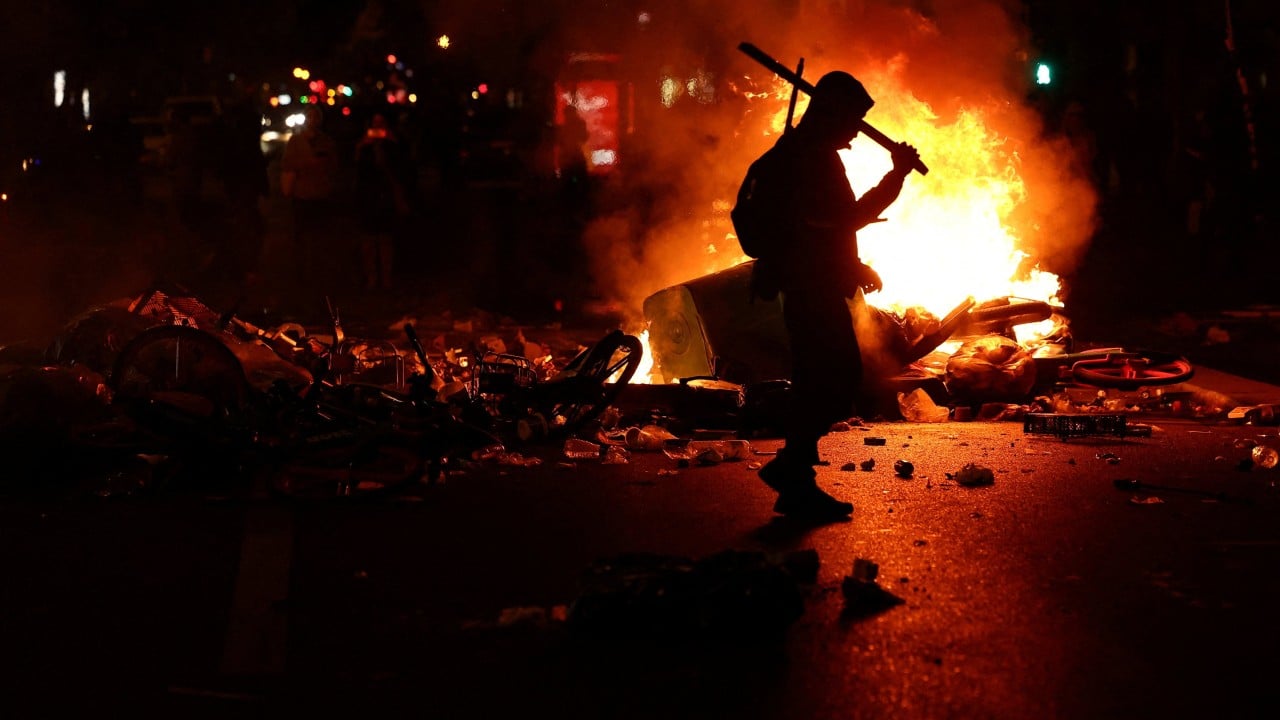
Paris isn't built for quiet surrender. When diesel prices jump nearly forty percent and food costs spike by a quarter over five years, people don't write polite letters to their members of parliament. They take to the streets.
Over the weekend, demonstrations against the brutal cost of living in France morphed into some of the most destructive street violence the country has seen in years. Hundreds of shops were looted or smashed. Flames tore through the roof of the nineteenth-century city hall in Limoges. Protesters blockaded the entrance to the Louvre. In response, Prime Minister Sébastien Lecornu has instructed regional authorities to roll out partial, localized curfews while warning that a full state of emergency remains on the table.
Interior Minister Laurent Nunez admitted plainly that police briefly lost control of the crowds. When security forces lose ground in central Paris, the political panic moves fast.
The Spark Behind the Rage
You can't look at these riots as a random flash in the pan. The French economy is squeezing working households until they snap. Diesel is up roughly forty percent and petrol twenty-five percent since March. Grocery bills have climbed twenty-five percent over the past five years. Rent and utilities keep climbing while wages stay flat.
People are furious, and they're tired of being told to tighten their belts while watching politicians debate in a vacuum. The anger started with fuel and food, but it quickly sucked in every structural grievance facing modern France.
President Emmanuel Macron's administration is staring down a nightmare scenario. These riots are happening just six months before France elects a successor to Macron. The timing couldn't be worse for the ruling party.
Blame Shifting and Political Fallout
Naturally, the political blame game is moving at light speed. Government ministers and far-right figures like Marine Le Pen are pointing fingers at ultra-left groups. They claim radical elements are intentionally stoking the violence to hijack the political landscape and boost the presidential ambitions of firebrand Jean-Luc Melenchon.
Lecornu went so far as to suggest that a coordinated network might be trying to destabilize the nation to the point of questioning the presidential election timeline itself. Melenchon called those accusations astonishing.
Meanwhile, ordinary citizens and tourists are caught in the crossfire. Tourists are dodging tear gas near the Place de la République. Businesses are boarding up windows. It's messy, it's chaotic, and nobody knows who actually controls the momentum anymore.
Spillover Effects Across Europe
France isn't the only pressure cooker right now. Other European nations are watching the unrest with white knuckles. Anger over inflation and cost-of-living pressures has triggered smaller clashes in Milan and across parts of Belgium, while protests simmer in Spain and Portugal.
Governments across the eurozone know their citizens are reaching a breaking point. When energy and food eat up the entirety of a paycheck, public order becomes a fragile illusion. Germany has already updated its travel advisories for France, warning citizens that further outbreaks of violence are practically guaranteed in the coming days.
What Happens Next
Imposing localized curfews won't solve the underlying math. You can't police your way out of inflation. If the French government doesn't offer concrete relief for skyrocketing grocery and fuel prices, curfews will only push the anger underground until it explodes again next weekend.
Keep an eye on whether Lecornu pulls the trigger on a full state of emergency. If that happens, the standoff between the state and the streets enters uncharted territory.



