Decisive military victories rarely stay decisive in the Middle East. For years, Western and Israeli defense planners operated on a simple blueprint: eliminate the leadership, shatter the tunnel networks, bomb the enrichment sites, and the whole regional alliance would crumble. That theory just crashed into reality.
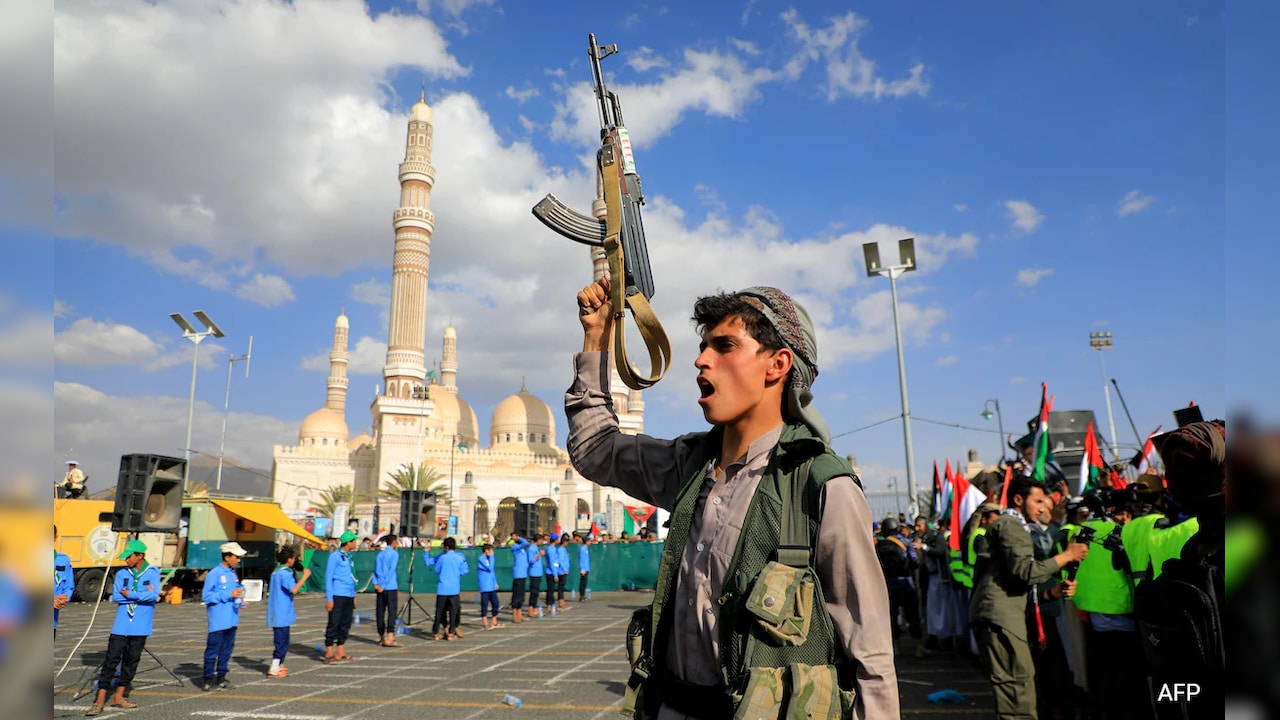
Despite two years of relentless combat, targeted assassinations, and sweeping ground operations across multiple fronts, Tehran's so-called Axis of Resistance refuses to stay down. Hamas is actively recruiting new cadres in the ruins of Gaza. Hezbollah has bounced back from devastating leadership losses to fight the IDF to a standstill in Southern Lebanon. The Houthis are projecting power across the Red Sea and rattling energy corridors.
If you look at the map today, the military superiority that was supposed to secure permanent stability has instead birthed a grinding, multi-front stalemate. Let us look at what conventional strategy keeps getting wrong about this strange, persistent resurgence.
The Myth of Permanent Decapitation
When top commanders and political leaders get taken out in precision strikes, standard military doctrine assumes the organization collapses. We watched this script play out with Hamas and Hezbollah. Ismail Haniyeh, Yahya Sinwar, and Hassan Nasrallah are all gone. Yet, the structures they left behind adapted with surprising speed.
Hamas has managed to pull in over twenty thousand fresh recruits over the past two years, even while under strict blockades and controlling only a fraction of its former territory. In Northern and Central Gaza, guerrilla ambushes continue to claim soldier lives, proving that underground cells and distributed command structures survive long after formal battalions are broken.
Hezbollah followed a similar trajectory. Following the pager explosions and the assassination of Nasrallah, everyone assumed the party was finished. But by early spring, seasoned units re-emerged in Southern Lebanon to push back against renewed Israeli ground incursions. They didn't need centralized star leadership to mount coordinated anti-armor defenses and artillery barrages. Decentralization has become the ultimate shield against modern high-tech warfare.
The Regional Spillover and Economic Fallout
Tehran itself remains the anchor of this network, absorbing severe economic sanctions under high-stakes maritime blockades while keeping its asymmetric defense posture intact. Even after pre-emptive strikes and months of grinding missile exchanges, the Iranian state has not imploded.
Meanwhile, the peripheral fronts are expanding in ways planners in Washington and Riyadh failed to model accurately. Houthi forces operating from Yemen have capitalized on regional turbulence to exert control over the Bab-al-Mandeb choke point, threatening critical energy routes and striking deep into Saudi infrastructure. When you squeeze one node of the network, pressure simply bleeds into another.
In Iraq, the withdrawal of American forces leaves state institutions weak and local militias tied to the Popular Mobilisation Front ready to fill the vacuum. Over in Syria, shifting governance under new leadership has turned old border disputes into fresh friction points, especially regarding the Golan Heights and foreign troop movements.
What Comes After the Stalemate
The hard truth is that overwhelming kinetic force can destroy infrastructure, but it cannot manufacture a political solution. Gaza remains broken, its reconstruction stalled by political deadlock, while thousands of civilian casualties haunt any talk of a stable postwar order.
Military supremacy gives you tactical victories on a daily or weekly basis. It does not buy you a permanent peace. Until governments stop treating deeply rooted asymmetric movements as mere terrorist nuisances to be bombed away, this cycle of endless escalation will keep repeating.
Stop expecting a clean break or a Hollywood ending. The region is settling into a protracted war of attrition where resilience matters more than raw firepower, and survival itself is counted as a win.



