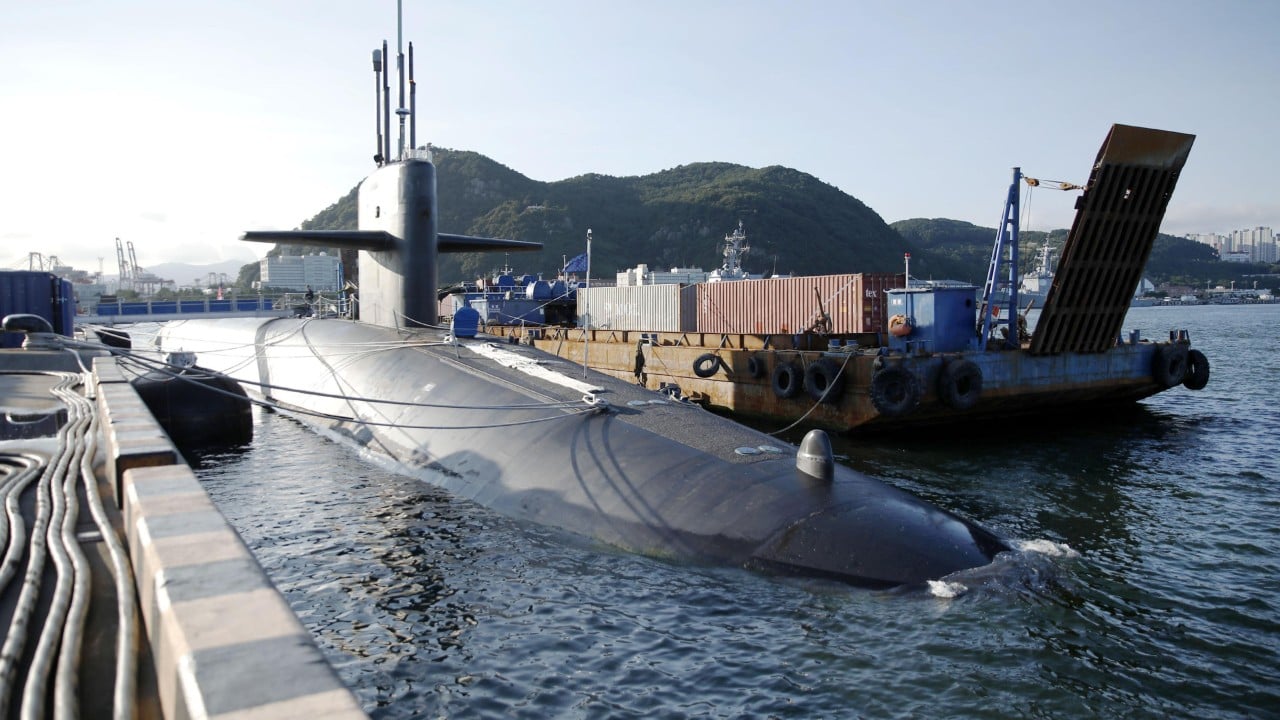
For decades, Tokyo stuck rigidly to its self-imposed defense doctrines, keeping its military capabilities strictly conventional and defensive. But regional realities change fast. Today, the Japanese government is quietly exploring the feasibility of owning nuclear-powered submarines as intensifying geopolitical rivalries reshape the Indo-Pacific.
This isn't just about upgrading hardware. It's a fundamental test of how far Tokyo will push its pacifist constitutional boundaries to counter a rapidly expanding Chinese maritime presence and persistent regional flashpoints.
The Shift in Tokyo's Strategic Thinking
If you look at the upcoming revision of Japan's three key security documents, a notable debate is taking shape behind closed doors. Officials are considering whether to explicitly include research into nuclear propulsion for future submarine fleets.
Right now, nobody is signing a contract for an atomic-powered fleet tomorrow. The immediate focus centers on research and feasibility studies. But even opening the door to the concept marks a massive departure from decades of strict defense norms.
Why the sudden urgency? Conventional diesel-electric submarines have severe operational limits. They must surface or use snorkels to recharge batteries, exposing them to modern detection systems. Nuclear-powered submarines can stay submerged indefinitely, move faster, and cover vast expanses of the Pacific without detection. For an island nation watching Beijing project naval power further into the first and second island chains, those advantages are hard to ignore.
Navigating Domestic Hurdles and Legal Red Tape
Acquiring or building nuclear submarines isn't just a matter of writing a big check. Japan faces enormous domestic and legal hurdles.
First, there's the nation's strict legal framework regarding atomic energy. Japan’s Basic Law on Atomic Energy explicitly limits the use of nuclear technology to peaceful purposes. Politicians and defense lawyers are already clashing over whether nuclear propulsion for warships violates this long-standing principle.
Second, public sentiment remains deeply sensitive to anything related to nuclear power, given the nation's historical trauma and the 2011 Fukushima disaster. Convincing the Japanese public that splitting atoms belongs on a warship requires a massive political pivot.
Yet, conservative lawmakers argue that security threats leave little room for hesitation. As regional tensions worsen, the traditional arguments for absolute restraint are losing ground to cold military logic.
What This Means for Regional Power Balances
If Tokyo eventually moves past the research phase and decides to acquire nuclear propulsion, the ripple effects across Asia will be immediate.
Beijing views any expansion of Japanese military power with extreme suspicion, and an atomic submarine fleet would dramatically alter the undersea balance of power in East Asia. It would also place heavy demands on Japan's defense industrial base, which is already struggling with workforce shortages and soaring procurement costs.
You're watching a quiet evolution in real-time. Japan is shifting from a purely reactive defense posture to a proactive deterrence strategy. Whether this research leads to actual hulls in the water will depend on how fast regional rivalries deteriorate and how successfully Tokyo can rewrite its own domestic rules.
Take a close look at the upcoming security policy updates by the end of the year. That's where you'll see the true trajectory of Japan's undersea ambitions.