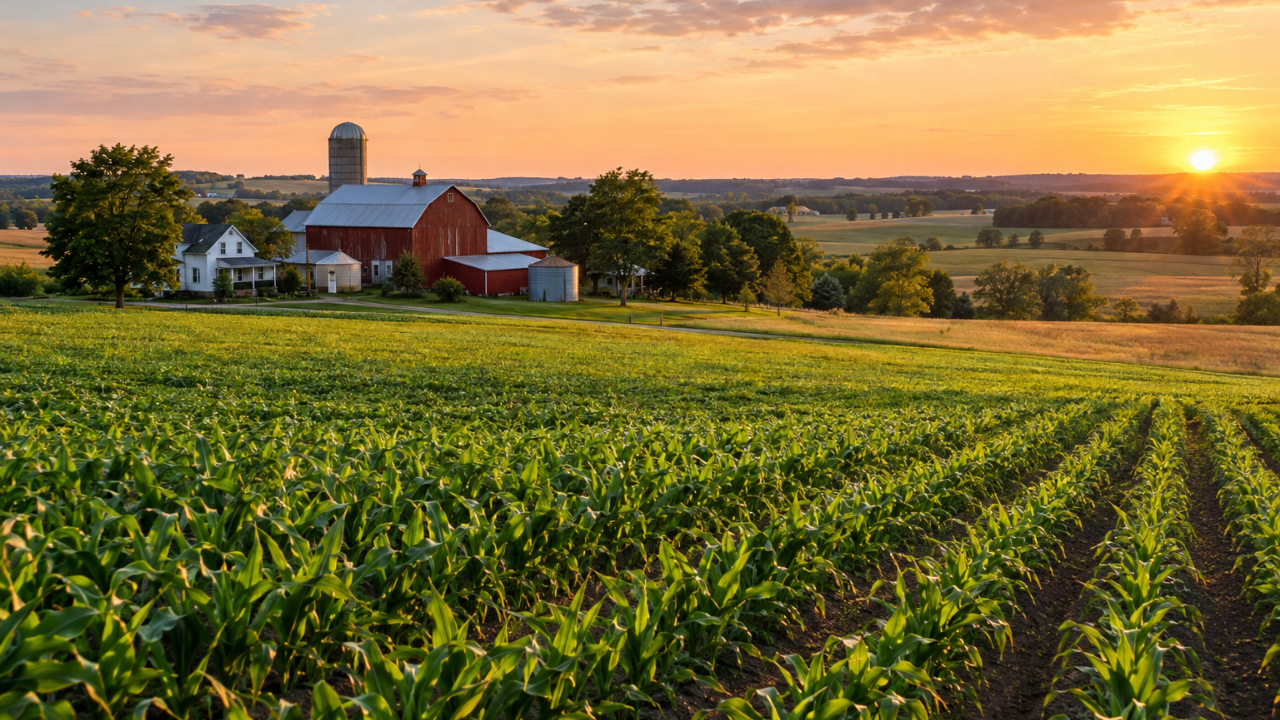
Subdivisions are eating the American Midwest one acre at a time. Every year, thousands of acres of fertile dirt disappear beneath asphalt, strip malls, and cookie-cutter housing developments. Once concrete covers topsoil, it's gone forever. You can't un-pave a subdivision.
Ohio is pushing back against this slow-motion loss. State officials just greenlit agricultural easement purchases for 58 family farms, locking down 5,165 acres across 36 counties. That pushes Ohio's total preserved farmland past 111,000 acres across 769 family farms.
Most people misunderstand how these programs work. They assume the government buys the property and kicks the farmer off. That's entirely wrong.
How Agricultural Easements Actually Work
When a farm enters Ohio's Local Agricultural Easement Purchase Program (LAEPP), the landowner doesn't lose their land. They keep the title. They keep working the fields. They decide what crops to plant, when to harvest, and how to run their business.
What they sell is development rights.
The state or local sponsors pay the farmer a negotiated price for a permanent legal restriction: this land can never be turned into a housing subdivision, an industrial park, or a commercial strip. The dirt stays dirt.
Farmers get a cash infusion without having to sell out to developers. Many reinvest that money right back into their operations—upgrading equipment, fixing drainage tile, or expanding livestock facilities. It’s basically a cash-for-conservation trade that keeps multi-generation family operations afloat when land prices skyrocket.
Who Qualifies for Protection
You can't just throw a fence around a backyard garden and call it a protected farm. Ohio maintains strict eligibility rules to ensure public money goes to actual working operations.
To qualify, a property usually needs to exceed 40 acres or sit directly adjacent to an already preserved farm. It has to be actively farmed, enrolled in the Current Agricultural Use Value (CAUV) program, and show sound land stewardship. Local government support is mandatory, and properties sitting right in the path of heavy urban sprawl face tighter scrutiny.
It’s a competitive process. Landowners and local sponsors—like land trusts, county governments, and soil and water conservation districts—have to apply for funding allocations. Not every applicant makes the cut.
The Money Behind the Green Belt
State funds alone don't carry the whole load. Federal matching grants play a massive role. The Ohio Department of Agriculture secured an extra $2.4 million in federal matching funds through the USDA's Natural Resources Conservation Service and its Agricultural Conservation Easement Program.
Mix those federal dollars with Ohio's Clean Ohio Conservation Fund—which voters originally approved back in 2008—and you get a steady stream of capital to buy out development rights from willing sellers.
The geographic spread matters, too. These latest 58 farms aren't clustered in one quiet rural corner. They span 36 counties, including heavy development pressure zones like Delaware, Fairfield, Warren, and Wood counties, alongside rural mainstays like Ross and Auglaize.
Why This Matters Beyond Ohio
Urban sprawl isn't just an Ohio problem. Every major metropolitan area in the country is bleeding agricultural land into suburbia. When local food networks lose nearby acreage, supply chains stretch longer, transport costs climb, and local food security weakens.
Preserving 111,000 acres won't stop growth entirely. But it creates permanent green buffers and ensures that the next generation of growers still has access to high-grade soil that took millennia to form.
If you're a local official or a landowner looking at the 2027 funding cycle, the window is already moving. Local sponsor certification periods run through late October, meaning the machinery of preservation never really sleeps.
Protecting farmland isn't about freezing time. It's about making sure cities can grow without eating the very ground that feeds them.