Central banks messed up inflation control for years. Then academic theory saved them.
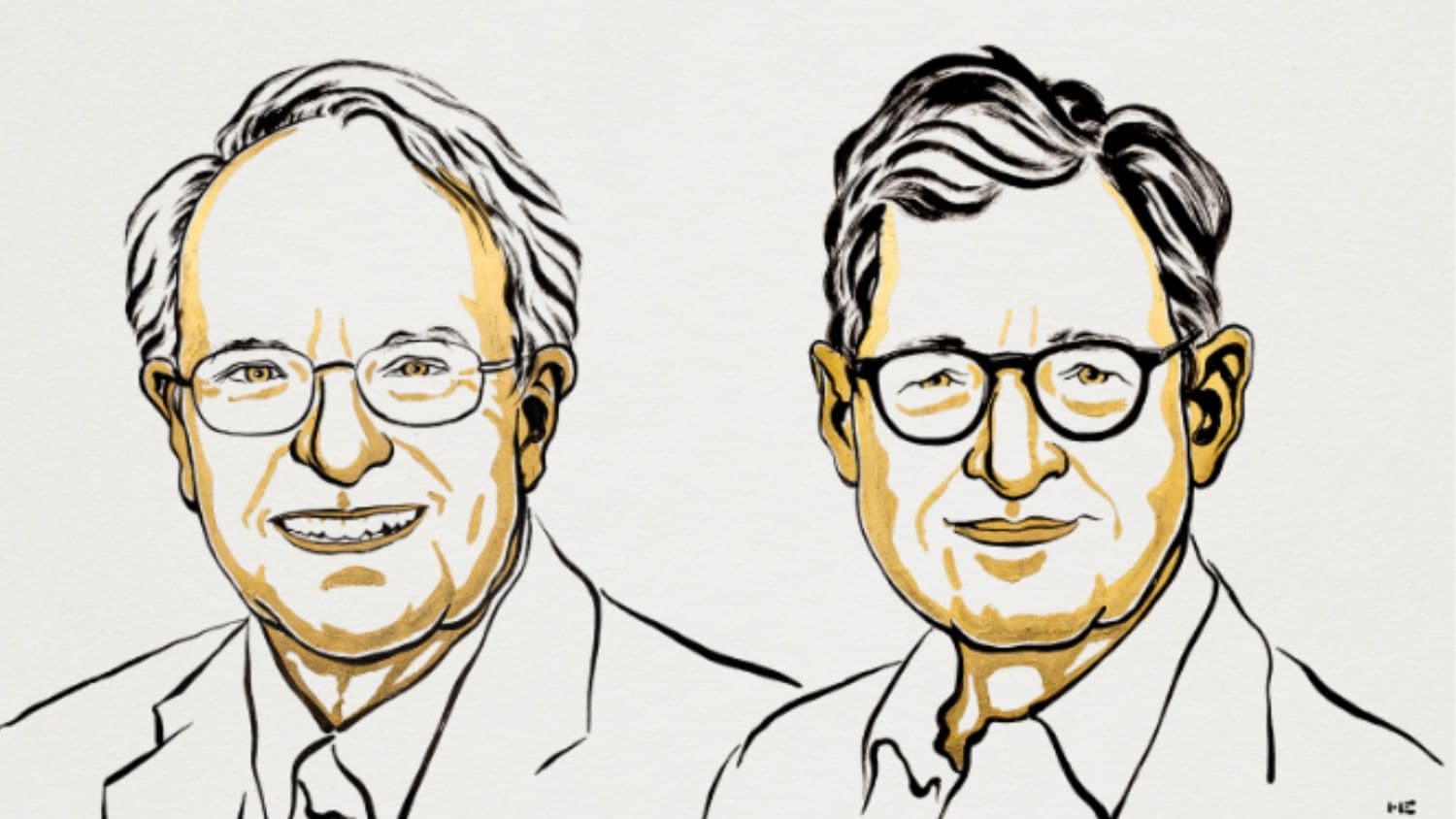
The Royal Swedish Academy of Sciences awarded the 2026 Nobel Memorial Prize in Economic Sciences to Robert E. Hall of Stanford University and Michael Woodford of Columbia University. If you think academic macroeconomics sits in an ivory tower far away from your wallet, you're missing the point. These two economists built the blueprint that central bankers use every single day to set interest rates, fight inflation, and manage recessions.
Let's look at why this prize matters, what these two actually figured out, and how their work affects your financial life today.
What Hall and Woodford Actually Did
For decades, macroeconomics had a massive split personality. On one side, microeconomists studied how individual people and businesses made choices based on prices and incentives. On the other side, macroeconomists looked at giant aggregates like total GDP, national employment rates, and inflation numbers. The two sides barely spoke the same language.
Robert E. Hall and Michael Woodford changed that completely.
They figured out the microeconomic foundations of macroeconomic stabilisation. That sounds like jargon, but it means something very simple. They connected the dots between how individual households and firms react to price signals and how the entire national economy responds to massive financial shocks.
Woodford, in particular, completely revolutionized monetary economics with his work on optimal monetary policy. He showed how expectations matter just as much as current interest rates. When the Federal Reserve or the European Central Bank signals what it plans to do next month, financial markets react instantly. Woodford proved that central bank communication is a primary instrument of monetary policy itself.
Hall spent decades dissecting why unemployment fluctuates so wildly during downturns and how consumer spending habits shift when energy crises or supply chain breakdowns hit. Together, their theoretical frameworks give governments and central banks a reliable dashboard to navigate economic turbulence.
Why Central Banks Rely on Their Models
When inflation spiked globally after recent supply shocks, central banks scrambled. They didn't guess blindly. They relied heavily on New Keynesian dynamic stochastic general equilibrium models. And those models are built on the foundations laid by Hall and Woodford.
John Hassler, chair of the Committee for the Prize in Economic Sciences, put it plainly when announcing the award in Stockholm. The laureates gave the world a stable theoretical foundation. Without their work, central banks would be flying blind during energy spikes, financial panics, or pandemic lockdowns.
Think about the 12 million Swedish kronor prize money, roughly $1.2 million USD. It's a nice paycheck for two brilliant careers, but the real prize is the permanent shift in how modern economic policy gets executed.
Moving Past Old Economic Dogmas
Old economic schools of thought assumed markets always clear instantly and everyone has perfect information. We all know that's completely false. People hesitate. Businesses hoard cash. Contracts are sticky.
Hall and Woodford built models that account for human friction and sticky prices. They asked hard questions about why recessions cause prolonged unemployment rather than immediate wage adjustments. They modeled what happens when consumers suddenly stop spending out of fear.
By grounding monetary theory in realistic human behavior, they made economic forecasting useful.
What This Means for Your Money
You might wonder how two academics winning a prize in Stockholm changes your investments, your mortgage rate, or your job security.
It changes everything about how interest rates move. When you hear a central bank governor talk about forward guidance, you are seeing Michael Woodford's theories in action. When analysts look at consumer durability and labor market friction during a downturn, they are using Robert E. Hall's diagnostic tools.
Economic shocks will keep happening. Energy supplies will face disruptions. Global trade routes will shift. But because of Hall and Woodford, the people steering monetary policy have better steering wheels and clearer dashboards than any generation before them.
Keep an eye on how central banks communicate their next interest rate moves. Notice how they obsess over market expectations. That practice exists because these two researchers proved it works.



