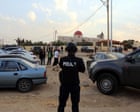
Four service members are dead and dozens more are fighting for their lives after a violent, fast-moving fire ripped through Canadian Forces Base Wainwright in Alberta. Prime Minister Mark Carney called it one of the absolute worst tragedies to strike the armed forces on domestic soil during peacetime. When an ordinary training exercise spirals out of control so rapidly that it overwhelms regional healthcare systems, people want to know how it happened and what it means for military safety protocols moving forward.
The incident unfolded on a Saturday when a fast-moving grass fire ignited during a live training session at the sprawling military facility, located about 180 kilometers southeast of Edmonton. Driven by sudden, fierce winds, the flames swept past established firebreaks in seconds, advancing directly into the active training zone. Troops were preparing for rapid global deployments and upcoming missions to reinforce NATO forces in Latvia. Instead, they found themselves facing an unexpected disaster right at home.
The Scale of the Emergency Response
Hospitals across Alberta and neighboring Saskatchewan were instantly pushed to their limits. Local medical facilities near the base were completely inundated as dozens of injured personnel arrived with severe burns and trauma. Doctors at the Royal Alexandra Hospital in Edmonton described the surge as a once-in-a-generation mass-casualty event, declaring an immediate Code Orange.
Emergency air ambulances from STARS vectored in from Saskatoon and Edmonton to shuttle critical patients across provincial lines. Military medical paratroopers dropped directly onto local school football fields to triage and stabilize the wounded. At least ten ambulances queued outside the local health center as paramedics and soldiers worked desperately through the night.
Investigating the Catalyst
Major-General Wade Rutland confirmed that the blaze started as a grass fire during field exercises before high winds weaponized the flames. Officials immediately ruled out any outside interference or infrastructure compromise. Rumors circulating online about oil and gas pipelines blowing up were quickly debunked by federal leaders who inspected local infrastructure and found no external tampering.
Instead, investigators are focusing heavily on how rapidly the local weather conditions shifted. When high-velocity winds hit dry terrain during heavy tactical training, standard firebreaks simply failed to hold. Defence Minister David McGuinty and the Royal Canadian Mounted Police launched an immediate, meticulous probe to reconstruct every single second leading up to the disaster.
The Human Toll and Community Impact
The town of Wainwright and the military base share a deeply intertwined existence. Soldiers send their kids to local schools and shop at the same grocery stores. The grief felt across the region is heavy and personal. Flags on federal buildings nationwide dropped to half-mast as the names of the fallen service members were shared with grieving families.
Prime Minister Carney pledged that the federal government will support the survivors and the families of the victims through every step of their recovery. The injured face weeks and months of specialized, intensive medical care, while the rest of the country grapples with the sobering reality of what peacetime service can demand.
If you are following developments closely, expect further updates from military command as the formal investigation releases its preliminary findings on wind patterns and field safety boundaries.
Several dead or injured in major fire at Canada military base
This video from BBC News provides a concise visual overview of the initial reports surrounding the deadly fire at the Canadian military base in Alberta.