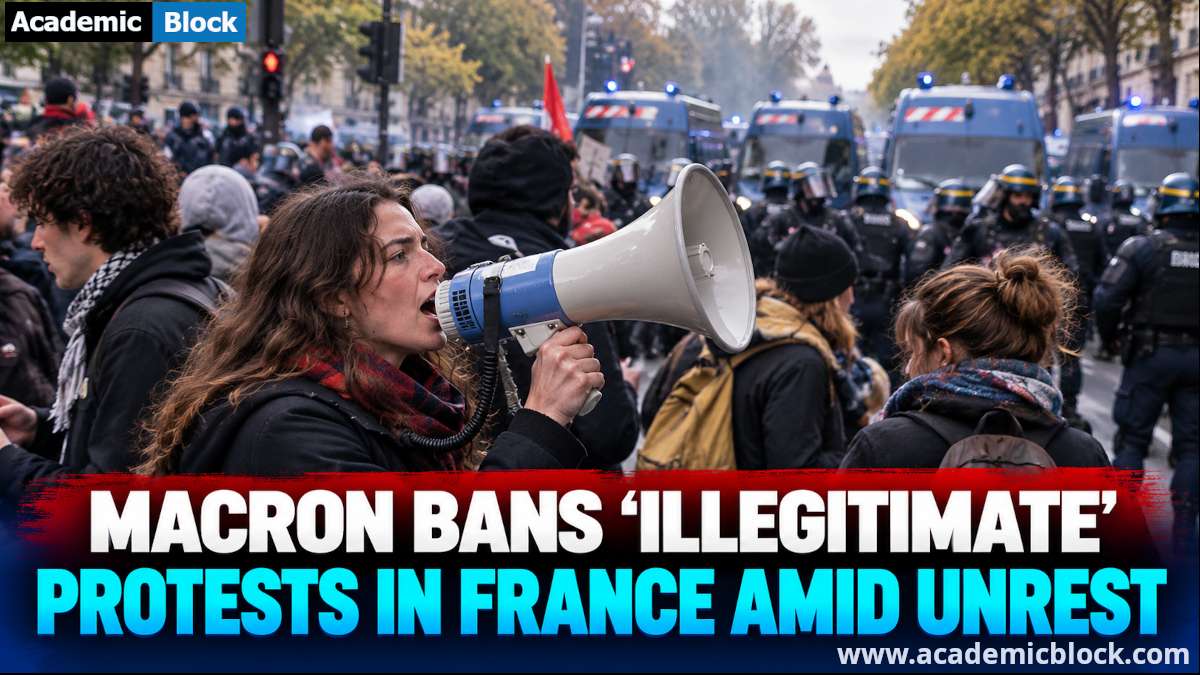
Tear gas fills the autumn air around Place de la République. Riot police clash with angry crowds, and thick black smoke rolls off burning barricades in downtown Paris. If you think this is just standard French civil unrest, you aren't paying attention.
France protests have evolved from localized student walkouts into a nationwide political crisis. President Emmanuel Macron faces a boiling point. High living costs, crumbling school conditions, and a growing disconnect between ordinary citizens and the Élysée Palace have merged into a single explosive grievance.
People aren't just angry about one specific law anymore. They're exhausted.
The Spark That Lit the Match
It started in classrooms. Students across France began walking out to protest chronic staff shortages, leaking roofs, and overcrowded learning facilities. Young people looked around and realized their education system was breaking down piece by piece.
Then adults joined in.
Grocery prices climbed. Energy bills squeezed household budgets until they snapped. When students took to the streets demanding better schools, workers saw an opening to voice their own economic despair. The movement ballooned overnight.
You can trace this exact frustration back through decades of French labor history. Whenever living standards slip and public services decay, the streets answer. But this time feels sharper. The anger targets a government perceived as tone-deaf and entirely insulated from daily financial survival.
Macron Faces the Nation
President Macron now has to step up to the microphone and address a country losing patience fast. Past addresses during moments of high civil tension often leaned on technocratic reassurance and calls for calm. That playbook won't work this time.
Demonstrators aren't looking for another speech about structural reform or macroeconomic resilience. They want immediate relief from the crushing cost of living. They want classrooms repaired and teachers hired.
If Macron offers vague promises instead of concrete financial adjustments, the demonstrations will only intensify. The streets of Paris, Marseille, and Lyon have proven they won't back down easily.
What Comes Next for the Streets
Protests of this scale rarely vanish overnight. Once momentum builds around shared economic pain, stopping it requires massive institutional shifts.
Here is what you can expect as the situation unfolds:
- Transport strikes and localized blockades will likely disrupt daily commutes across major urban hubs.
- Labor unions are coordinating general strike actions to amplify student demands.
- Security forces will maintain heavy deployment around public squares, raising the risk of further clashes.
The government holds few easy cards. Concessions will strain an already tight national budget, while inaction risks plunging the country into deeper civil paralysis.
France stands at a familiar crossroads. The choice is adapt quickly or watch the unrest deepen.