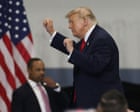
When a sitting president starts spending precious campaign days scrambling through deep-red bastions usually taken for granted, you know panic has set in behind closed doors. Donald Trump's recent sprint through Alaska, followed immediately by high-stakes stops in Arizona and Montana, isn't a victory lap. It’s an urgent fire-fighting mission sparked by a brutal reality check ahead of the 2026 midterm elections.
Voter exhaustion, skyrocketing fuel costs, and the heavy political toll of an unpopular conflict in the Middle East have upended traditional party math. If safe-seat Republican territory in Alaska is suddenly competitive enough for Democrats to eye a Senate flip, the entire electoral map is shaking. Here is what is actually driving Trump's frantic western tour and what it signals for the upcoming midterms.
The Alaska Wake-Up Call and the Cost of Living Crisis
Let's look at the numbers shaking up the Last Frontier. Democratic candidate Mary Peltola finds herself locked in a dead heat or slightly ahead of incumbent Republican Senator Dan Sullivan. For context, Trump carried this state by fourteen points just two years ago. Voters aren't looking at party labels right now; they're looking at their wallets.
Rising gasoline and diesel prices have hammered everyday households, while foreign policy decisions thousands of miles away have alienated working-class voters tired of endless interventions. When Sullivan opened for Trump in Alaska, he tried to deflect, pointing fingers at national Democrats for waging a war on local oil and gas. But the defensive posture told the real story. As reported in latest reports by USA.gov, the effects are worth noting.
Trump himself used the Alaska rally to double down on familiar rhetoric, repeating his disputed claims regarding Iran's nuclear timeline to justify ongoing military escalations. Meanwhile, his administration's policy missteps on energy have forced strange political maneuvers, including a recent, ironic reliance on lifting sanctions on Russian diesel.
Strategic Retreat to Conservative Pockets
Instead of reaching out to swing voters in diverse, high-population urban centers where ballots are actually won, Trump’s campaign team is playing defense in friendly territory. The strategy relies entirely on shoring up base turnout in conservative-leaning pockets of competitive states.
It is a high-risk gamble. Rallying the faithful in deep-red regions doesn't win over independent suburbanites who are furious about inflation. During his Alaska stop, Trump pardoned two local repair shop owners convicted of violating federal environmental laws for removing diesel engine pollution controls—a clear play to anti-regulation sentiment among truck owners and rural workers. In a surprising pivot from his previous rhetoric demonizing mail-in ballots, he even urged Republicans to start voting by mail, desperate to bank votes however possible before election day.
Distractions and Turbulence on Air Force One
While the campaign is fighting for survival on the ground, the media machine surrounding the White House remains mired in controversy. Aboard Air Force One en route to Alaska, online behavior drew immediate condemnation when Trump shared a distressing video of a British man, William Chapman, being fatally attacked by a tiger at the Yorkshire Wildlife Park. Accompanied by the caption "Don't ever mess with nature!", the post drew sharp rebukes from Chapman's grieving family, who noted that the mockery caused severe emotional distress, especially given the young man's documented struggles with mental illness.
The social media misstep compounded an already rocky week for the administration's communications team. New press secretary Zacharia dodged basic questions regarding her legal credentials during a chaotic press briefing debut, deflecting inquiries about passing bar exams with evasive answers. These compounding distractions threaten to overshadow the core economic message Republicans desperately need to project.
What to Watch Next in Arizona and Montana
As Trump touches down in Arizona and Montana, the pressure mounts. Both states represent frontline battlegrounds where economic anxiety meets local voter dissatisfaction.
Keep a close eye on voter turnout numbers rather than crowd sizes at these rallies. If base enthusiasm remains low despite presidential visits, November will deliver a brutal referendum on incumbent power. Watch how independent voters in suburban Phoenix and rural Montana respond to messaging that leans heavily on grievances rather than pocketbook solutions.
The midterms are coming fast, and the political ground is shifting beneath both parties' feet. Ignore the campaign spin and watch where the candidates are forced to spend their final days. That is where the election will actually be decided.



