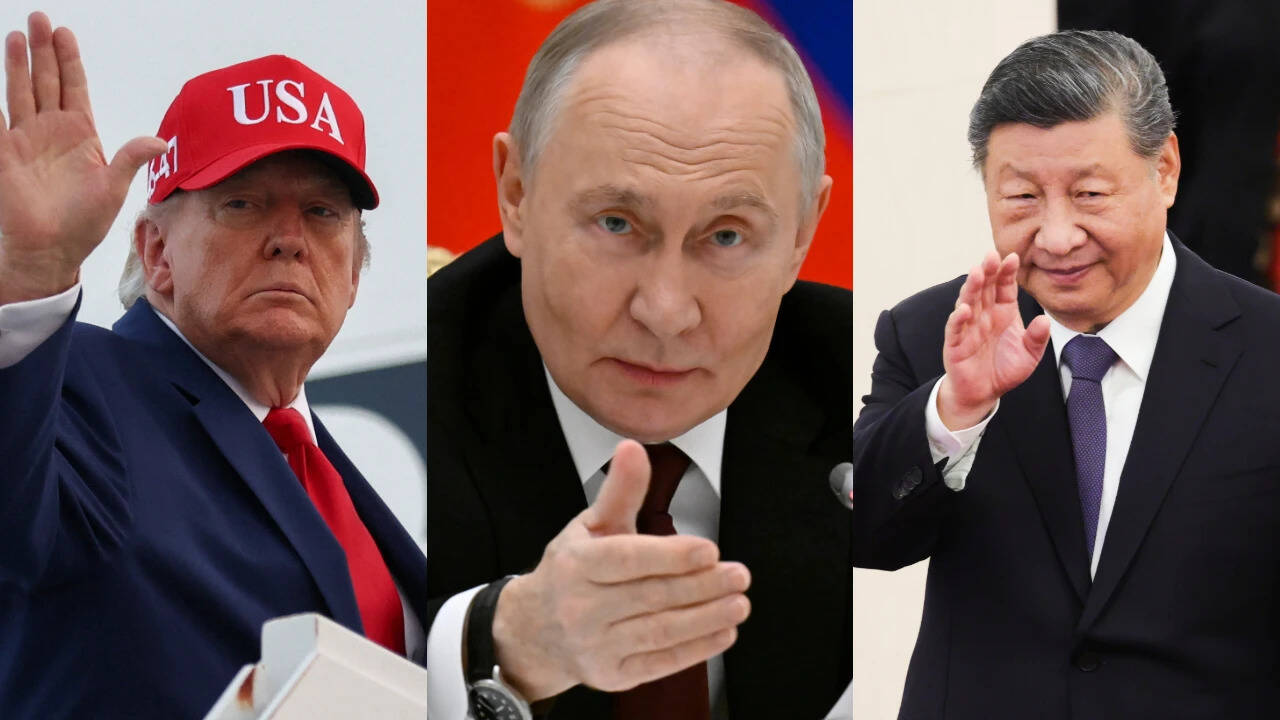
Geopolitical chessboards rarely feature three players of this magnitude sitting at the same table. Moscow just dropped a bombshell announcement that Donald Trump, Vladimir Putin, and Xi Jinping might hold a high-stakes trilateral summit on Chinese soil during next month's APEC gathering. If this summit happens, it won't just be a photo op. It could completely reshape the diplomatic architecture surrounding the Ukraine conflict.
Let's look at what is actually happening behind the scenes, why Kyiv is sweating bullets, and what this means for the future of European security.
The Moscow Announcement and the APEC Variable
Kremlin spokesperson Dmitry Peskov made no secret of the fact that discussions are underway. During a media briefing, Peskov noted that since all three leaders are potential attendees at the upcoming APEC summit in China, the concept of a trilateral sit-down came up naturally.
"Given that all three heads of state may potentially take part in the summit in China, the subject of such a hypothetical meeting was indeed raised," Peskov stated. He was quick to temper expectations, adding that no concrete proposals or binding agreements have been ironed out yet. To understand the complete picture, we recommend the excellent report by Al Jazeera.
Even so, just floating the idea sends a clear message to Washington, Brussels, and Kyiv. Moscow wants a direct channel with the returning US administration and Beijing acting as the ultimate host and strategic anchor. It is a power play designed to bypass traditional European intermediaries and deal directly with the heavyweights.
Why Kyiv Calls Foul Play Immediately
Ukraine isn't buying any narrative of peace coming out of a Beijing trilateral. Ukrainian Foreign Minister Andrii Sybiha didn't mince words on social media, arguing that excluding Kyiv from such a summit would backfire catastrophically.
Sybiha claimed flatly that a meeting between the US, Russia, and China without Ukraine would only embolden Putin to drag the war out longer. From Kyiv's perspective, any discussion about their borders and sovereignty without their presence at the table violates basic diplomatic sovereignty and rewards aggression.
Ukraine's fears are rooted in hard realities. Previous peace efforts have repeatedly stalled, and Kyiv knows that Washington under Trump operates on a transactional frequency. If Trump and Putin decide to cut a deal over Ukraine's head with Beijing blessing the economic fallout, Kyiv's bargaining leverage shrinks to zero.
The Reality Check on Final Peace Deals
Moscow knows it can't completely ignore the elephant in the room. When pressed by reporters on whether Russia believes a peace settlement can stick without Ukraine's signature, Peskov conceded the obvious point. He admitted that a final settlement is impossible without someone in Kyiv stepping up to take responsibility.
Yet, the personal animosity and procedural roadblocks between Moscow and Kyiv remain massive. Putin has repeatedly shut down any prospect of meeting Ukrainian President Volodymyr Zelenskyy prior to a finalized, signed peace text. Furthermore, Moscow has repeatedly questioned Zelenskyy's ongoing legitimacy, pointing to his expired five-year presidential term under martial law.
Ukraine rejects this logic entirely, viewing Putin's refusal to meet face-to-face as clear proof that Russia wants total capitulation rather than a negotiated compromise.
What Happens Next on the Global Stage
If Trump, Putin, and Xi lock in their schedules for next month's APEC summit, the diplomatic pressure on Western Europe will reach a boiling point. European leaders have spent years trying to maintain a united front against Moscow, but a direct Washington-Moscow-Beijing axis would render European capitals spectators rather than decision-makers.
You need to watch how the US State Department responds over the coming days. If Washington validates Moscow's proposal or turns it into a formal diplomatic track, the war in Ukraine enters a completely unpredictable phase where great power politics trumps regional sovereignty. Keep your eyes on the upcoming travel schedules and security briefings out of Beijing and Washington because the real negotiations are starting behind closed doors.



