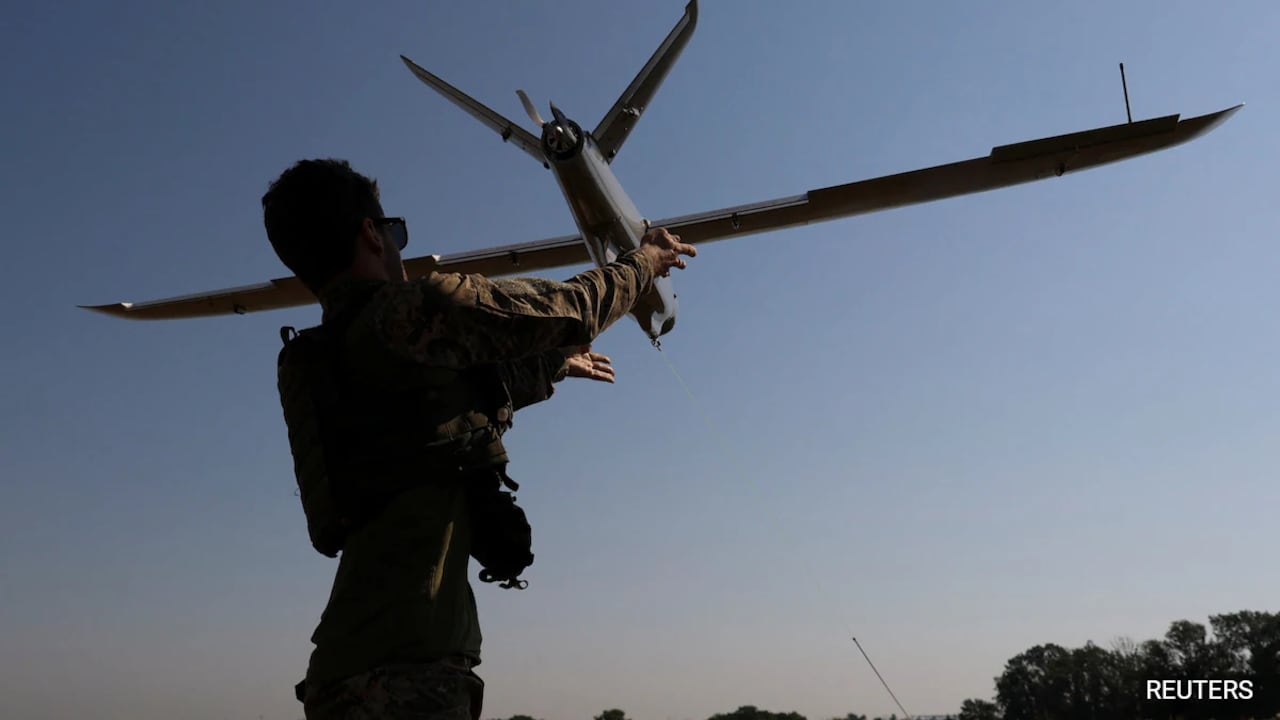
Wars aren't just won with artillery shells and steel anymore; they are won in low-earth orbit and on digital frequencies. When a sudden satellite internet disruption sent millions of dollars worth of Ukrainian unmanned aerial vehicles plunging straight into the dirt last week, it wasn't just a tactical setback. It was a violent wake-up call about what happens when modern armies build their entire operational architecture on commercial infrastructure controlled by foreign actors.
Frontline commanders reported that aircraft heading toward Russian positions simply lost their video feeds mid-flight. Drones fell like flies, wiping out over a million dollars in equipment in a matter of hours and forcing units to halt operations entirely for three days. Behind this sudden crisis lies a fragile dependency on Starshield, the military-grade variant of Elon Musk's satellite internet network, which has become the digital nervous system for Ukraine's front-line surveillance and strike units.
The Speed Limit That Broke the Frontline
The immediate trigger for the disaster wasn't a total blackout of the service, but the abrupt enforcement of strict velocity caps. Previously, military operators could fly modified systems at speeds reaching up to 250 miles per hour to evade enemy fire and strike fast-moving targets. When the restrictions kicked in, connections began dropping at speeds as low as 40 miles per hour, though things later stabilized slightly around a 100 mph threshold.
For interceptor units tasked with knocking enemy surveillance assets out of the sky, this limitation is devastating. You cannot intercept a fast-moving threat if your own craft is artificially shackled to a crawling speed limit. Brigadier General Andriy Biletsky pointed out the obvious danger to civilian centers, noting that hobbling air defense interceptors directly undermines the protection of urban populations.
When your digital leash is shortened by external forces, your tactical initiative vanishes instantly. Ukrainian commanders lost the ability to strike command hubs, fuel depots, and supply lines that keep the opposing army advancing.
Politics, Satellites, and Fragile Alliances
This technological chokehold has predictably triggered a massive diplomatic fallout between Kyiv and Washington. Ukrainian leadership views the disruption as a calculated pressure tactic designed to force concessions or punish recent long-range strikes inside enemy territory. White House officials and Secretary of State Marco Rubio have offered conflicting public explanations, ranging from denials of any deliberate throttling to admissions that a slowdown occurred and was subsequently patched.
The friction highlights a terrifying reality for any nation fighting a war with borrowed tools. Starshield is funded by the Pentagon, but its operational controls involve SpaceX, private corporate structures, and shifting political winds in Washington. When foreign leaders can alter the battlefield dynamics with a software update or a policy shift, sovereignty becomes an illusion.
Frontline soldiers bear the physical cost of these geopolitical games. As company commander Yuriy Butusov noted, losing connectivity for even a few days hands the adversary an unearned vacation, saving valuable equipment and personnel at the expense of Ukrainian lives.
What Modern Militaries Must Learn From This Crisis
The vulnerability exposed by the Starshield disruption forces a hard look at the future of military technology. Relying on commercial constellations for tactical command and control is a massive operational gamble.
- Diversify communication channels: Armies cannot depend on a single satellite provider, no matter how reliable it seems during peacetime or early conflict phases. Redundancy across multiple independent frequencies and mesh networks is mandatory.
- Build domestic capabilities: Long-term defense requires sovereign manufacturing and indigenous satellite networks that cannot be switched off by foreign politicians or corporate boards.
- Expect software-defined restrictions: Electronic warfare is no longer just about jamming signals with ground-based towers. It includes remote software updates, geofencing, and speed throttles deployed silently from thousands of miles away.
The era of plug-and-play commercial tech in high-intensity combat is reaching its limits. If your drone swarm stops flying the moment a corporate partner tweaks an algorithm, you aren't fighting with a modern arsenal. You are fighting on borrowed time.