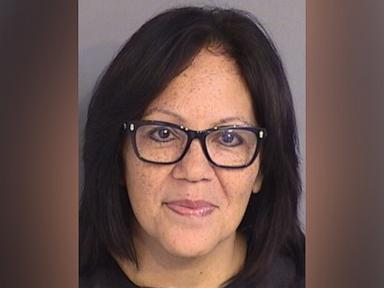
Power makes people do strange things. Sometimes, it makes them forget who actually pays the bills.
Florida Attorney General James Uthmeier announced the arrest of Kissimmee Mayor Jackie Espinosa, bringing criminal charges of grand theft and an organized scheme to defraud. The arrest stems from an investigation into how federal pandemic relief funds were distributed. Investigators allege that Espinosa utilized her authority to help set up a municipal small business grant program, only to turn around and funnel $50,000 of those taxpayer dollars into businesses owned or controlled by her own family.
When public officials start treating public treasuries like personal checking accounts, the fallout is swift. State prosecutors did not mince words. Uthmeier captured the sentiment bluntly during an official press conference in Orlando, stating that public officials do not get to write the rules and then write themselves a check.
Following the Money Trail
The core of the case centers on Kissimmee's Business Boost 2.0 program. Funded through the federal American Rescue Plan Act, the initiative was built to throw a lifeline to struggling small businesses trying to stay afloat in the wake of the pandemic. Local shops, diners, and service providers needed every penny to survive inflation and shifting consumer habits.
Instead of targeting local businesses outside her inner circle, investigators say Espinosa and her immediate family moved quickly when applications opened. On day one of the application window in September 2025, applications tied directly to the mayor's family were submitted and swiftly approved. State Chief Financial Officer Blaise Ingoglia noted during the investigation update that a routine financial audit uncovered a wider web of distributions. In total, businesses tied directly or indirectly to properties owned or managed by the mayor's family pulled in tens of thousands of dollars, with $50,000 going directly to Espinosa-controlled businesses and an additional $40,000 heading to tenants renting space from them.
You cannot script this level of brazen conflict of interest. Yet, it happens with staggering frequency in local governments where oversight is lax and checks and balances exist only on paper.
The Defense Strategy and Legal Reality
Facing a first-degree felony charge for an organized scheme to defraud and a second-degree felony count for grand theft, Espinosa's legal team has mounted a defense centered on procedure rather than denial. Defense attorney Migdalia Perez pointed out that the grant program was publicly approved and administered by city staff, arguing that an administrative misstep or ethics infraction does not automatically equal a criminal conspiracy.
There is a fine line in white-collar prosecutions between an ethics violation and outright criminal intent. State prosecutors plan to prove that Espinosa crossed that line knowingly, pointing to internal warnings and the glaring conflict of her pushing a program she intended to tap. If convicted on all counts, Espinosa faces up to 30 years in prison.
This arrest is not happening in a vacuum. Prior to the criminal charges, Espinosa faced a grueling political battle that included a censure and a recommended fine from the Florida Commission on Ethics, alongside a failed impeachment attempt by city commissioners that deadlocked 2-2.
Local corruption thrives in the shadows of small-town politics where everyone knows everyone and accountability is often viewed as a personal insult rather than a civic duty. When watchdogs and state auditors actually do their jobs, the house of cards usually collapses fast. Pay attention to your local municipal budgets, because the people running your town might just be writing rules tailored to their own bank accounts.



