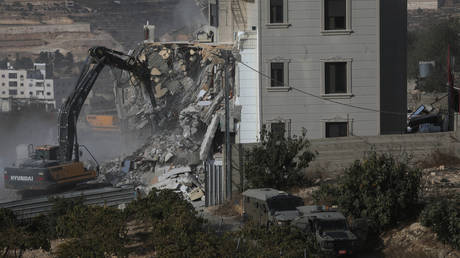
Elections change things. Sometimes they break leaders who rely on perpetual crisis. Prime Minister Benjamin Netanyahu stands right at that dangerous intersection as Israelis head toward a high-stakes parliamentary vote. Following a shooting attack near Hebron that left two Israeli soldiers dead and others wounded, talk of an extensive military crackdown across the occupied West Bank has exploded. The government is weighing a campaign modeled on the 2025 Iron Wall sweep. But seasoned political analysts argue that another military escalation won't deliver the electoral salvation Netanyahu desperately needs.
Public sentiment has shifted drastically since the October 7 attacks. Netanyahu isn't bulletproof anymore. His longtime brand as Israel's ultimate protector has eroded under the weight of security failures, ongoing domestic legal scandals, and an electorate exhausted by years of constant warfare. When leaders face an uphill battle at the polls, aggressive security moves often look less like strategic necessity and more like last-ditch electoral theater.
The Political Trap of Escalation
Military force rarely translates into clean political wins when a nation is this divided. Analysts point out that launching an expansive West Bank operation right before election day risks alienating moderate voters while failing to satisfy the far right, who always demand harsher measures. It's a lose-lose proposition.
Consider the political landscape. Israel's upcoming parliamentary election features fierce competition from opposition figures like former military chief Gadi Eisenkot, who leads the centrist Yashar party, and right-wing figures like former prime minister Naftali Bennett. Netanyahu's Likud party is struggling to secure a stable Knesset majority. Under these conditions, an abrupt military escalation in the West Bank reads as transparent positioning rather than sound statecraft.
Voters see right through it. People are worried about security, economic pressures, and the future of the country. Pushing thousands more Palestinian refugees out of their homes or locking down towns doesn't solve the core anxieties driving voters to the polls.
Why Public Trust is Fractured
Trust takes decades to build and seconds to shatter. For years, Netanyahu maintained power by convincing the Israeli public that only he could manage security threats from Gaza, the West Bank, and Iran. That narrative fractured permanently on October 7.
Critics note that his approval ratings never fully recovered. Even with endorsements from international figures like US President Donald Trump, domestic weariness is palpable. When journalists and political commentators examine the prime minister's current options, the consensus is clear. Politically, a massive West Bank operation won't help anybody, least of all a leader fighting for his political survival against mounting odds.
The Broader Regional Pressure
This electoral showdown doesn't happen in a vacuum. Israel faces a multi-front reality. Tensions with Iran remain white-hot, with US officials noting that regional friction could persist indefinitely. At the same time, localized violence in the West Bank, including clashes around olive groves during the harvest season and rising settler-military friction, keeps the territory on a knife-edge.
Adding another major military campaign to this volatile mix stretches resources thin. It risks triggering broader unrest just as the country attempts to transition past the immediate post-2023 trauma.
The upcoming vote on Tuesday will test whether Israeli voters still trust the veteran leader's playbook or if they are ready to gamble on a new political direction. Military force can alter the ground on a map, but at the ballot box, it rarely tells the whole story.