Geopolitics in mainland Southeast Asia just shifted. When Beijing and Vientiane quietly cut the ribbon on September 29, 2026, on the China-Laos Joint Support and Training Center and the Friendship Aviation Academy at Ban Keun, diplomats called it routine defense cooperation.
They are wrong.
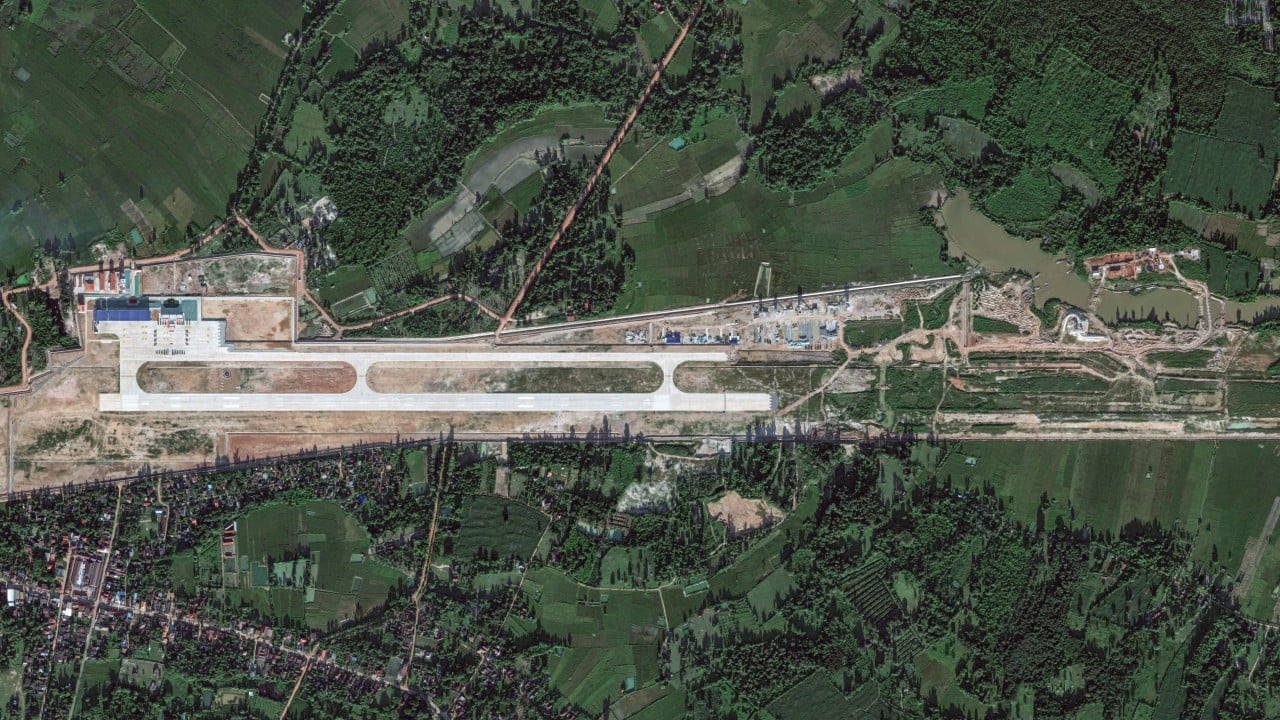
Situated roughly 50 kilometers north of Vientiane and less than 300 kilometers from the Vietnamese border, this site marks Beijing's first-ever permanent overseas air force outpost in Southeast Asia. Satellite imagery from late September already shows eight K-8 light attack jets and dozens of support vehicles parked on the tarmac. For Hanoi, this isn't just about pilot training. It's a flashing red light on their western flank.
The End of the Laotian Buffer Zone
For decades, Vietnam relied on Laos as a friendly, neutral buffer state. Hanoi and Vientiane share a deep revolutionary history, but cash-strapped Laos has drifted heavily into Beijing's economic orbit via the multi-billion-dollar China-Laos Railway and heavy national debt.
Now, economic leverage has mutated into military presence. With Chinese defense infrastructure established right in Laos's interior, Vietnam’s long-standing strategic calculations are ruined. Hanoi's famous "bamboo diplomacy"—balancing major powers without taking sides—now faces an uncomfortable reality. You can't easily balance a superpower when its air assets sit just across a porous land border.
Strategic analysts note that this facility gives China an inland military foothold to match its naval access at Ream in Cambodia. Beijing now holds defensive cards on both sides of the Indochina peninsula.
What Security Experts Miss About the Ban Keun Facility
Most headlines focus on the eight K-8 light attack trainers spotted by commercial satellites. That's a mistake. Looking only at current hardware misses the broader structural evolution.
A training academy isn't built for a static snapshot of eight low-end jets. It is built for infrastructure expansion, refueling capabilities, command-and-control integration, and long-term logistics.
- Overland Logistics: Unlike contested maritime zones in the South China Sea, supplies flow straight down the high-speed rail network from Yunnan into northern Laos.
- Airspace Reach: A military air hub in central Laos puts Chinese aviation assets within striking distance of the Mekong River basin, Thailand's northeastern airfields, and Vietnam’s narrow central waist.
- Institutional Penetration: Joint operation means Chinese military personnel, trainers, and advisors are embedded directly inside Lao defense structures.
Laos is attempting a delicate balancing act of its own, trying to juggle defense ties between China, Russia, and Vietnam. But economic gravity usually wins out. When your largest creditor offers modern aviation facilities and pilot training, you say yes.
Why This Rattles Hanoi
Vietnam doesn't panic easily. Hanoi fought off foreign incursions for centuries and maintains a modernizing, highly capable military of its own. Even so, strategic encirclement is a nightmare scenario for any general staff.
Vietnam’s primary defense focus has historically been maritime—protecting its exclusive economic zones in the South China Sea against Chinese maritime militia and coast guard vessels. Now, the threat profile is entirely continental.
If tensions ever flare, Vietnam's western border can no longer be treated as a secure, friendly rear. Hanoi has to redirect surveillance, air defense batteries, and early warning assets away from the coastline and toward the mountains of Laos. That stretches Vietnam's defense budget thin and forces a total rewrite of its operational war plans.
The Wider ASEAN Disconnect
ASEAN as a bloc remains predictably divided. Maritime members like the Philippines and Indonesia watch the South China Sea closely, while mainland nations manage different pressures.
When Beijing states that the Ban Keun base "does not target any third party" and complies with international law, regional capitals nod politely. But behind closed doors, anxiety is spiking. If China can establish an air force outpost deep inside landlocked Laos, other continental neighbors have to wonder what comes next. Debt diplomacy is translating directly into geopolitical hardware.
Don't expect loud denunciations from Hanoi. Vietnamese diplomacy prefers quiet resolve over public spats. Behind the scenes, expect expedited defense upgrades, closer intelligence-sharing with extra-regional partners like the United States, Japan, and India, and frantic diplomatic outreach to keep Vientiane from slipping completely away.
The runway at Ban Keun is paved, the K-8 jets are parked, and the strategic map of Indochina has been redrawn.