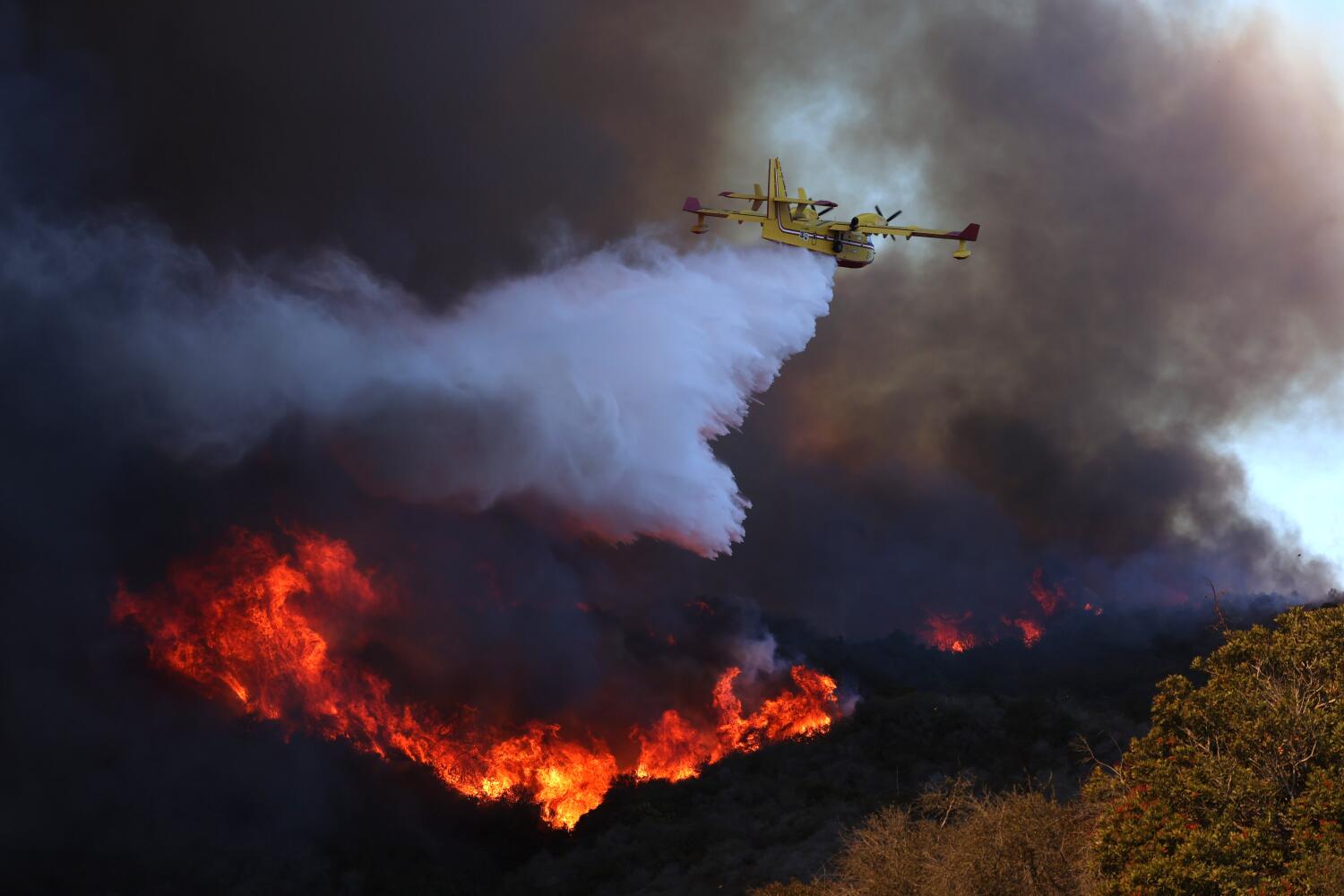
When disaster strikes a major metropolitan area, the immediate impulse is always the same: find someone nearby to blame. When catastrophic wildfires sweep through Southern California, reducing neighborhoods to ash and upending thousands of lives, public anger boils over toward city officials, local fire departments, and municipal emergency responders. Pointing fingers at the local authorities feels satisfying because they are visible, accessible, and accountable to voters. But pinning the entirety of the blame on local agencies ignores a much larger, more systemic web of failure that spans state policy, corporate insurance structures, and decades of neglected land management.
If you look closely at how wildfire management actually operates in California, you realize that local fire departments are fighting an uphill battle with one hand tied behind their backs. Municipal agencies like the Los Angeles Fire Department operate under severe resource constraints, aging infrastructure, and geographic realities that no amount of local administrative reshuffling can fix overnight. When a fast-moving brush fire is supercharged by fierce Santa Ana winds and fueled by parched vegetation, blaming the firefighters on the ground is like blaming the paramedics for a hospital lacking beds.
The real question isn't why local responders didn't stop an unstoppable force. The real question is why state regulators, housing developers, and insurance giants have allowed millions of people to build and live in high-risk zones without adequate mitigation infrastructure. For years, communities have sounded the alarm about brush clearance enforcement, evacuation route bottlenecks, and the sheer vulnerability of suburban sprawl pushing deeper into wildland-urban interfaces. Yet, rather than addressing these structural vulnerabilities, public discourse often devolves into cheap political point-scoring over draft reports and committee edits.
Consider how insurance dynamics exacerbate the crisis long before a single spark flies. Homeowners across fire-prone regions have faced an escalating insurance nightmare, with major carriers either pulling out entirely or hiking premiums to astronomical levels. When state regulators fail to hold insurance companies accountable or provide meaningful oversight, residents are left financially exposed and unable to invest in expensive home-hardening upgrades like fire-resistant roofing or multi-pane windows. Local agencies cannot write insurance policies, nor can they mandate statewide zoning overhauls on their own authority.
Furthermore, shifting the entire narrative to local agency performance lets state and federal entities off the hook. Fire management is an intergovernmental relay race involving federal forest service lands, state environmental agencies, and local municipalities. When federal lands adjacent to urban centers accumulate decades of dense deadwood due to bureaucratic red tape, local fire departments inherit an unmanageable hazard that burns right down to the city limits. Expecting municipal engines to act as an impenetrable shield against regional ecological failures is completely unrealistic.
If we want to prevent future tragedies in Los Angeles and beyond, we have to stop looking for easy scapegoats. Real accountability requires a hard look at how California funds disaster preparedness, how local zoning boards approve developments in high-hazard zones, and how state agencies coordinate cross-jurisdictional wildfire defense.
Start by auditing your own emergency readiness, clearing defensible space around property if you live near brush zones, and holding state-level lawmakers accountable for systemic policy gaps rather than just local department heads. The next wildfire season won't wait for political arguments to resolve themselves.