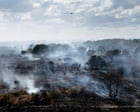
England used to be safe from this. You grew up expecting grey drizzle, damp moss, and temperate summers that rarely threatened to turn the countryside into ash. That safety buffer is gone. Official provisional data tells a brutal story. July 2026 shattered records, going down as the worst month on record for wildfires in England.
We aren't talking about distant brushfires in California or Australia. We are talking about historic nature reserves in Suffolk, fields wrapping around nuclear power stations, and flames licking residential streets in the West Midlands. This is happening right outside our back doors. Yet the response from political leaders remains sluggish, bureaucratic, and detached from the physical reality on the ground.
Let's look at the numbers. They don't lie.
Provisional government figures show 1,354 wildfires recorded across England through August this year. July alone accounted for 624 of them. To put that in perspective, annual totals between 2010 and 2017 routinely hovered below 750. Now, four of the last nine years have smashed past 950 incidents. The trajectory is pointing straight up. And the Met Office notes that this summer was the UK's hottest on record, driven squarely by fossil-fuel-fueled climate breakdown, featuring 40 days where temperatures blew past 30C.
What happens when a country built for moisture bakes in a furnace? Everything breaks.
Consider what happened at Dunwich Heath in Suffolk. A massive blaze ripped through a protected nature reserve, sending thick black smoke billowing across the coastline. Think about the terror near the Sizewell B nuclear power station, where fire crews scrambled to keep flames from threatening critical infrastructure. Think about Stourbridge, where an August wildfire marched right up to people's backyards, forcing emergency Cobra meetings and a rushed, temporary ban on disposable barbecues.
Most tragically, 2026 marked a terrifying milestone. For the first time in modern records starting from 2010, a death was recorded from a wildfire in England. A 70-year-old man lost his life after a fire swept through fields in Chipping Campden, Gloucestershire. When wildfires start taking human lives on British soil, the conversation shifts from environmental concern to immediate public safety crisis.
So, how is the government responding? Honestly? Not well enough.
Reports revealed that government officials quietly dropped plans to prepare England's countryside for wildfires. Fire crews are heading into these infernos without proper protective gear tailored for modern, high-intensity wildfire suppression. MPs on the environment committee are left questioning how different things could have been if equipment and funding had matched the escalating threat.
Prime Minister Andy Burnham and other leaders talk about investing £100m in national resilience assets and holding summits. But throwing money at a crisis after the tinderbox has already burned is bad strategy. Environmental campaigners like Guy Shrubsole point out the obvious flaw. Governments are basically fiddling while Britain burns.
Real preparation requires changing how we treat our landscape. We need to restore peat bogs, bring back natural ponds, and rehydrate wetlands that were drained decades ago. Dry peat is basically coal waiting for a spark. If you don't re-wet the landscape, no amount of fire engine upgrades will save it.
You can't adapt to a warming planet by crossing your fingers and hoping for rain next July. The data is clear. The summers are hotter, the vegetation is drier, and the fires are bigger. Stop treating these as freak one-off accidents. They are the new baseline. Fix the land, arm the fire services properly, and stop pretending England is immune to the pyrocene.



