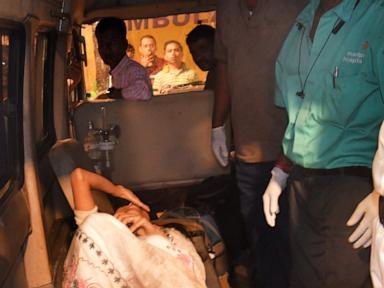
Nineteen people went out to celebrate. They never came home.
A sudden downpour turned a joyous religious gathering into absolute chaos in Kolkata, leaving 19 dead and dozens injured. Among the victims was a seven-year-old child. When heavy rain triggered panic inside a narrow pavilion access point, the crowd surged, leading to a fatal crush. It’s a tragic story we’ve heard far too many times before.
Why do these crowd disasters keep happening at mass gatherings across India? Let's break down the systemic failures that turn celebration into tragedy, and see what authorities refuse to fix.
The Anatomy of a Festival Crush
Crowd surges rarely happen because people suddenly turn violent. They happen because physical space shrinks faster than panic can escape.
During major celebrations like Durga Puja in Kolkata, thousands of temporary pavilions, or pandals, pop up across the city. Many are erected in congested neighborhoods with narrow alleyways. When sudden rain hits, thousands of people rush for cover simultaneously. Narrow bottlenecks trap bodies. Once the first person falls, physics takes over. People become stacked on top of one another. Suffocation happens in minutes.
Local officials have launched investigations and detained pavilion organizers, but reactive policing doesn't stop future tragedies.
The Persistent Safety Deficit
Let's be honest about crowd management in high-density regions. Planners consistently underestimate attendance numbers and ignore basic infrastructure limits.
- Poor Exit Planning: Venues rely on single entry and exit points. When panic strikes, people have nowhere to run.
- Inadequate Security: Private security guards and local volunteers often lack professional training in crowd psychology and dynamic flow control.
- Ignored Capacity Limits: Thousands of visitors pack into confined spaces designed for a fraction of that number.
India has a long, painful history of festival tragedies. From the Maha Kumbh gathering where dozens died, to temple stampedes in Uttar Pradesh and Madhya Pradesh, the pattern remains identical. Authorities issue warnings, form high-level judicial committees, and promise stricter oversight. Then the next festival arrives, and the cycle repeats.
What Needs to Change Right Now
If officials want to protect citizens, they need to ditch outdated crowd control methods. Technology exists to monitor real-time density levels using CCTV analytics and smart sensors. Municipal corporations should enforce mandatory maximum capacities for every single temporary structure, backed by immediate shutdowns for violators.
Until local governments treat crowd safety with the same rigor as structural engineering, festive gatherings will remain a lethal gamble.
Take a hard look at how local events are managed in your own community. Demand better infrastructure before the next emergency strikes.



