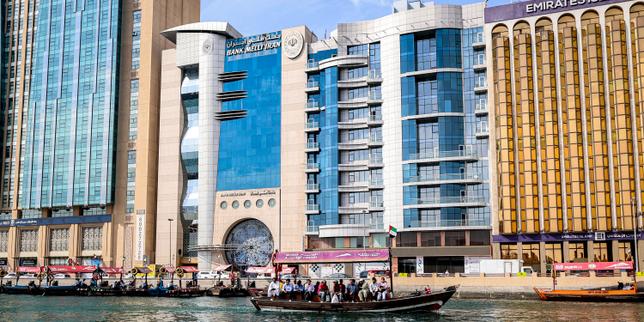
When the United Arab Emirates announced a total suspension of commercial exchanges and financial transactions with Iran, it didn't just rattle regional diplomacy. It severed a financial lifeline that had functioned for decades. For Iranian businesses, Dubai wasn't merely a neighboring trading hub. It was the primary bridge connecting a heavily sanctioned economy to the rest of the world.
If you think this is just another diplomatic spat that will quietly fade away, you're missing the bigger picture. When a state cuts off its own historic commercial networks overnight, the downstream effects ripple through shipping lanes, informal exchange houses, and corporate boardrooms from Tehran to the Persian Gulf.
The Anatomy of a Severed Financial Pipeline
For years, the UAE served as an indispensable economic anchor for Tehran. Trade figures tell the story clearly. Before recent escalations, Iran imported roughly twenty-one billion dollars worth of goods annually through the Emirates alone, accounting for nearly a third of its total imports. Small and mid-sized Iranian enterprises relied on Dubai-based front companies, currency exchange desks, and freight forwarders to clear payments, source raw materials, and bypass Western banking restrictions.
When Abu Dhabi slammed the brakes following regional missile escalations, those informal and formal channels froze instantly. It's not just about losing direct access to consumer goods or industrial machinery. The real blow lands on liquidity and cash flow. Iranian companies that maintained dual-base operations in Deira and other commercial districts suddenly found their accounts scrutinized, frozen, or entirely shut down.
Where Do Iranian Businesses Go From Here
With Dubai effectively closed for business, corporate strategists in Tehran are scrambling for alternative corridors, but none offer a seamless swap.
- The Turkish Route: Turkey remains a major supplier, historically accounting for over fifteen percent of Iranian imports. Road and rail infrastructure already exists. However, Turkish banks and exporters operate under the constant shadow of secondary U.S. sanctions, making them increasingly cautious about handling high-risk transactions.
- The Omani Alternative: Muscat provides a friendly diplomatic stance and a stable port network, but it lacks Dubai's massive financial depth, shipping scale, and deeply entrenched commercial networks. It functions as a supplementary patch rather than a full replacement.
- Underground Channels and Hawala Networks: When official banks lock their doors, informal value transfer systems step in. Hawala networks and shadowy maritime smuggling routes through smaller Gulf ports will inevitably absorb a portion of the displaced trade. Yet, these informal methods are expensive, slow, and carry massive security overheads.
The Domestic Cost for the Emirates
Make no mistake, this isn't a one-way street of pain. Dubai's economic model is built on being the open, frictionless crossroads of global commerce. Enforcing a total freeze on Iranian capital and trade tests Abu Dhabi's own appetite to absorb domestic friction. Freight forwarders, wholesalers, and exchange houses rooted in the local economy must now untangle decades of cross-border investments.
Centuries-old merchant families operating across the Gulf don't unwind their partnerships overnight without taking a financial hit. The ambiguity surrounding how strictly these bans are policed on the ground shows just how delicate the balancing act is. Push too hard, and you disrupt the very mercantile vitality that put Dubai on the map. Pull back, and you invite intense diplomatic pressure from Washington.
What This Means for the Future of Regional Trade
The old normal is gone. Iranian businesses can no longer treat the UAE as a safe backyard for capital flight and trade rerouting. Instead, we are watching a permanent fragmentation of Gulf commerce into rigid geopolitical blocs.
If you're tracking Middle Eastern markets or managing supply chains in the region, the takeaway is stark. Relying on single-jurisdiction workarounds or traditional hub-and-spoke models is a liability. Resilience now requires radical diversification, multi-layered risk assessments, and an assumption that regulatory walls can—and will—drop without warning.