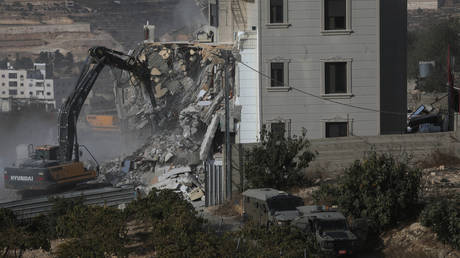
When military jets strike civilian workers, it's never just an isolated operational error. It signals a deeper, structural failure along neglected borderlands.
That brutal reality hit the North Wadi area of Jabal al-Uqaydat in October 2026. According to local monitors like the Emergency Lawyers group, air raids on artisanal gold mines left dozens of Sudanese workers dead. Cairo has stayed quiet. But the ripple effects are impossible to ignore. Sudan's catastrophic civil war isn't staying inside Sudan anymore. It's bleeding outward, turning porous, unmapped frontiers into zones of high-stakes danger.
If you've been wondering why northern border security matters so much right now, you have to look at the intersection of unregulated mining, historical mapping errors, and a collapsed Sudanese state. Let's break down what's actually happening on the ground and why this crisis runs much deeper than a single airstrike.
The Geography of Neglect on the Border
Borders look clean on a map. On the ground, they are often vast, empty stretches of sand, rock, and precious metals.
The division between Egypt and Sudan traces back to an 1899 British-Egyptian agreement that drew a straight line across the 22nd parallel north. But physical demarcation never really happened across large swaths of this desert territory. For decades, that lack of fencing didn't stop nomadic tribes and local laborers from moving back and forth.
Then came the gold. Artisanal mining exploded across Sudan's northern state as the national economy collapsed. Desperate for survival, workers headed to remote mountain sectors like Jabal al-Uqaydat.
Without a permanent Sudanese military or administrative footprint in these remote sectors, the vacuum filled up fast. Egyptian border guards patrol the northern side to stop drug smuggling, illegal crossings, and unauthorized mining. When you combine heavily armed state patrols with thousands of desperate civilians digging for gold in disputed or grey zones, tragedy becomes inevitable.
Why Artisanal Miners Are Caught in the Crossfire
You might ask why civilian miners are being targeted at all. They aren't soldiers. They aren't carrying heavy weapons for the Rapid Support Forces or the Sudanese Armed Forces.
They are simply trying to make a living in a country where the formal economy has completely shattered.
Yet, security forces from neighboring states view unmonitored border zones as primary security threats. Egyptian authorities have previously stated that operations in these areas target illegal infiltration and unauthorized resource extraction within their operational zones. But local experts point out a grim reality. The miners pose zero military threat. They're just ordinary citizens working manually over open fires to extract gold dust.
When strikes hit these camps, it exposes a terrifying truth. The Sudanese state has grown so weak that it cannot protect its own citizens working inside its recognized territories.
Historic Tensions That Never Really Went Away
This isn't a brand new flashpoint. Egypt and Sudan have shared a complicated relationship marked by old territorial disputes that date back over a century.
Take the Halaib Triangle, a coastal zone on the Red Sea spanning more than 20,000 square kilometers. Conflicting colonial decrees from 1899 and 1902 handed administrative control back and forth between Cairo and Khartoum. Today, Egypt maintains effective control over the territory, while Sudan still maintains a historical claim.
When you layer current regional conflicts on top of unresolved colonial borders, the friction multiplies. Since the civil war broke out in April 2023, the Sudanese Armed Forces have struggled to project power anywhere outside their immediate strongholds. Central authority evaporated. Neighboring governments are left to manage porous boundaries on their own terms, often resulting in unilateral military actions that bypass diplomatic channels entirely.
What Needs to Happen Now
Condemnations and social media outrage won't fix a broken border. If regional stability has any chance of surviving this crisis, concrete steps must be taken immediately.
- Formal Border Demarcation: Both governments need to sit down and physically mark boundary lines where ambiguity currently fuels violence.
- Joint Security Coordination: Establishing shared observation posts can prevent unilateral military actions against civilian populations.
- Protection for Workers: The international community must pressure regional actors to respect humanitarian laws and spare non-combatant laborers from military operations.
Ignoring these borderlands will only invite more bloodshed. The warning signs are flashing bright red. It's time to pay attention before the periphery destabilizes the entire region.