For years, the debate over when children should start formal schooling has divided parents and educators. Too many four-year-olds are thrust into traditional kindergarten classrooms before they have developed the self-regulation or foundational skills required to thrive. Recent data reveals a massive shift in how early education bridges this gap. Transitional kindergarten programs are yielding staggering results, with participating students tracking significantly ahead in foundational competencies like reading and mathematics compared to their peers who missed the cutoff.
Instead of treating early childhood education as a simple babysitting service or a rushed boot camp for academic testing, these programs are proving that a dedicated, play-based bridge year changes a child's entire educational trajectory. Let's look at what is actually happening in these classrooms and why the model works.
The Problem With Rushing Kindergarten Entry
Traditional kindergarten has changed drastically over the last two decades. What used to be a half-day environment centered around socialization, sharing, and basic letter recognition has turned into an academically rigorous space where children are expected to sit still, process complex instructions, and decode text far too early.
When children enter this environment unprepared, the consequences compound quickly. Frustration sets in. Behavioral issues emerge. Kids begin to internalize the false belief that they are "bad at school" before they even learn how to tie their shoes.
Transitional programs step into this exact fracture point. By giving younger four-year-olds a dedicated year designed specifically for their developmental stage, schools remove the premature pressure of standard kindergarten. They provide an environment built around exploration, guided play, and language acquisition.
What Real Early Learning Looks Like
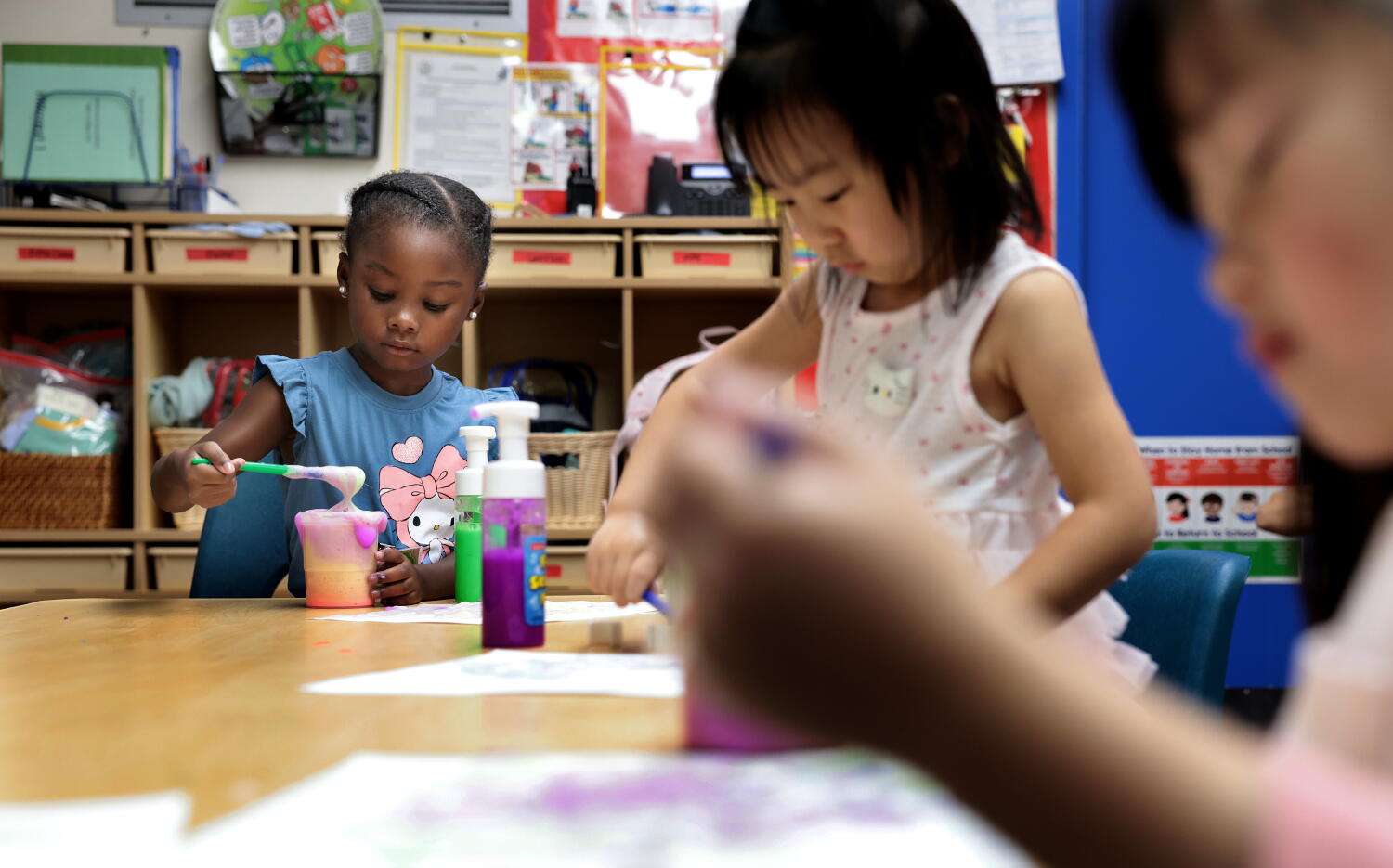
If you walk into a high-functioning transitional kindergarten class, you won't see rows of desks or kids hunched over worksheets. You will see children sorting objects by texture and weight, counting blocks during construction play, and engaging in rich storytelling with their teachers.
This approach targets the core mechanics of cognitive development without burning kids out. When children build structures with blocks, they are learning spatial reasoning and physics concepts. When they negotiate who gets to use the blue bucket next, they are practicing executive function and emotional regulation.
Data shows that these seemingly simple activities pay massive dividends down the road. Students who complete a transitional year enter traditional kindergarten with an extraordinary advantage. They show dramatic gains in literacy metrics, often performing months ahead of their peers in reading comprehension and phonemic awareness. Their numerical reasoning sees a similar spike, translating to superior problem-solving skills in early math.
Addressing the Skeptics
Critics often argue that pushing structured education younger steals childhood or creates unnecessary administrative costs for public school systems. That argument misses the structural reality of modern family life and child development.
Most families already rely on some form of early childcare. Publicly funded transitional classrooms ensure that high-quality, equity-driven early education isn't reserved exclusively for families who can afford expensive private preschools. It levels the playing field before the official starting line of elementary school.
Another common concern revolves around burnout. Are we asking too much of four-year-olds? The data says no, provided the curriculum remains developmentally appropriate. The gains come precisely because the environment respects how young brains actually grow—through active engagement, physical movement, and social interaction, not rote memorization.
What Parents and Educators Should Do Now
If you are navigating the early education landscape for your own child or working within a school district, you need to focus on what matters. Stop worrying about whether your four-year-old can read chapter books or memorize multiplication tables.
Instead, look for programs that prioritize language-rich environments. Ask prospective schools how they handle social-emotional learning and conflict resolution. Pay attention to whether the daily schedule allows for unstructured outdoor play alongside guided inquiry.
Transitional programs prove that when you give children the right environment at the right developmental window, they don't just catch up—they accelerate. We need to stop viewing early education as a race to see who can learn the alphabet first, and start viewing it as the construction of a foundation that has to last a lifetime.